
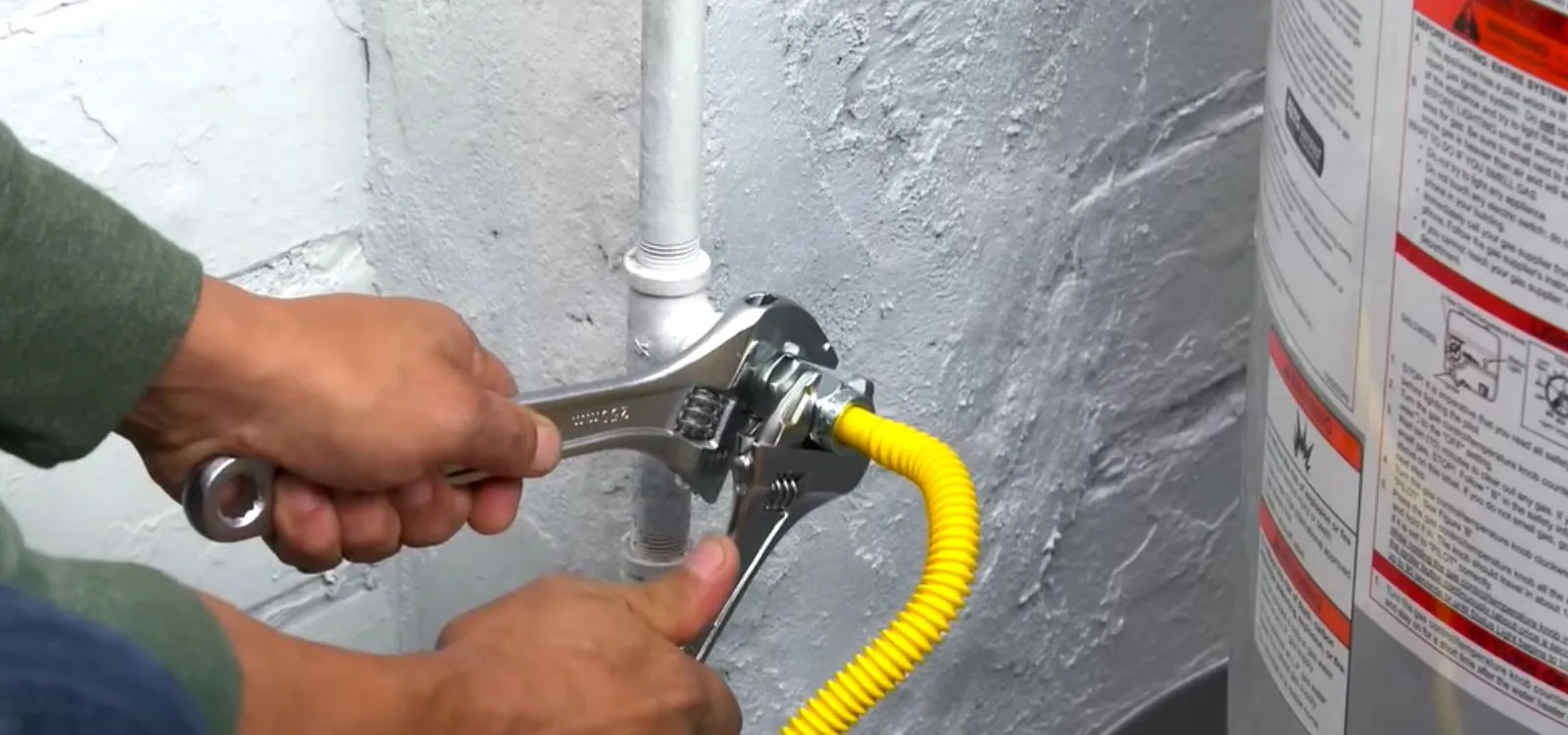
When a tank fails in Willoughby, OH, the choice is usually made for you by a puddle. Water heater replacement is the job of draining, disconnecting and hauling out the old unit, then setting, venting, piping and testing a new one. Our emergency line runs 24/7, and same-day appointments are available when the schedule allows.
A replacement is also the one moment you can change things that were wrong all along: tank size, fuel, venting, a missing expansion tank, a rusted shutoff. This page explains how to read your tank's age and condition, which options exist, and what happens on the day.
Reading your tank: age, fuel and where the water is from
Start with the label on the side of the tank. The serial number carries the manufacture month and year, and the manufacturer's website or your technician can decode it. Many tanks start to fail somewhere in their second decade, sooner or later depending on water quality, sediment and whether the anode rod was ever replaced.
Fuel matters next. A gas tank has a flue, a gas shutoff and a draft hood. An electric tank has a dedicated circuit and two elements. Those details decide what a swap costs and whether switching fuel is practical.
Then find the wet spot. Water at the top fittings is often a connection problem. Water seeping from the base or soaking the insulation is almost always a failed shell.
Signs the tank is finished
Any one of these can be enough. Two or more means plan the swap now.
Wet base or puddle
Water around the foot of the tank that returns after you wipe it up means the steel has rusted through.
Rust in hot water only
Brown or red water from hot taps while cold taps run clear points to corrosion inside the tank.
Sediment and noise
Rumbling, popping and short hot-water supply mean a thick layer of scale or sediment at the bottom.
Repeated repairs
A second or third failed part in a short time on an older tank usually means the whole unit is wearing out.
Tank under-sized for the household
If three people can no longer shower in a row, the answer may be a larger tank, not a repair.
Tank down or leaking?
Call and tell us the fuel type and tank age, and we will say whether swapping it is likely.
A failed tank: when it cannot wait
Call the emergency line right away if water is flowing across the floor, a gas appliance smells wrong, or water has reached the furnace, a panel or a finished room. Call when the leak is slow too, but a slow weep can usually wait for a same-day appointment when available.
Never go near a heater or standing water while the electric supply is live. If there is any gas smell, leave the house and call the gas utility or 911 from outside before anything else.
Isolating a failing tank before we arrive
Close the cold inlet
Turn the cold-water valve above the tank fully clockwise. If it will not close, use the main shutoff at the meter or house entry.
Power down
Switch off the electric tank's breaker. On a gas tank, turn the gas control to OFF. Do not relight anything afterwards.
Do not touch the relief valve
Leave the temperature and pressure relief valve and its discharge pipe exactly as they are. Never plug or cap them.
Protect and document
Lift boxes off the floor, run a wet vac if the water is shallow, and photograph the tank label, the leak and any damage.
How a swap runs from call to hot water
- 1
Phone assessment
You describe the fuel, tank size, location and symptoms. We tell you what we expect to find and what to have clear on site.
- 2
Shutoff and drain
We close the water and fuel, drain the tank to a floor drain or sump, and disconnect the supply, vent and relief piping.
- 3
Inspect what stays
Shutoff valves, gas flex, vent pipe, nipples and the electrical whip are checked. Anything corroded is replaced rather than reused.
- 4
Set and connect
The new tank is leveled, piped with dielectric nipples or unions where dissimilar metals meet, vented, and fitted with a new relief valve discharge run.
- 5
Fill, purge and test
We fill the tank, bleed air from the lines, test connections for leaks, check gas pressure and combustion on gas units, and set the thermostat to a safe temperature.
- 6
Haul-away
The old tank leaves with us unless you ask otherwise.
Like-for-like or change the fuel
Most households replace what they have, but a failed tank is the cheapest moment to think about alternatives.
| Option | Best for | Trade-off |
|---|---|---|
| Gas tank, same fuel | Homes with a working vent and gas line | Needs a sound flue and combustion air, and the vent often decides the work |
| Electric tank | Homes with no gas, or where venting is impractical | Slower recovery than gas, and a dedicated circuit must be adequate |
| Heat pump tank | Basements that stay between 40 and 90 degrees Fahrenheit with open air space | Larger unit that cools the room, needs about 1,000 cubic feet of air around it and a condensate drain |
| Tankless gas | Households wanting endless hot water and floor space | Needs larger gas piping, proper venting and yearly descaling. See our tankless water heater page |
The U.S. Department of Energy says heat pump water heaters need about 1,000 cubic feet of air space and ambient temperatures of 40 to 90 degrees Fahrenheit.
Items we replace with the tank
A new tank does not stand alone. The temperature and pressure relief valve and its discharge pipe are installed or replaced and left open to drain, never capped. Supply connections often need new flexible connectors or nipples, and the old shutoff valve is replaced if it will not turn.
If the house has a check valve or pressure-reducing valve on the incoming line, the system is a closed loop and heated water has nowhere to expand. In that case a thermal expansion tank belongs on the cold line near the heater, and Lake County lists expansion tanks as permit items. The plumber follows the Ohio Plumbing Code and the local permit rules for the connection.
If the old tank's leak turns out to be a failing supply line instead, leak detection finds it before the new tank is hooked up.
Gas units also get a leak test at every joint and a check that the vent draws properly. A vent that was fine for a 40-year-old tank is not always fine for a new high-efficiency one. If the chimney lining is the issue, we tell you and may bring in a chimney contractor.
Permits and inspection for a tank swap
Plumbing permits inside the City of Willoughby come from the city's Division of Building Inspection at One Public Square (440-951-2800). Willoughby Hills and Willowick, among other communities, are covered by the Lake County Building Department, whose 2026 residential schedule lists a water heater only permit at $45, so check the current schedule before the visit.
For Eastlake, Mentor and Wickliffe, we tell you which local office to confirm with for your address. A permit is the homeowner's protection if a home sale or insurance claim later asks who installed the heater.
After a basement flood or a power outage
In Lake County, flooded basements are not rare. April 2026 flooding along the Chagrin River sent water into Willoughby Hills basements, and power outages disabled sump pumps in some homes.
A gas or electric heater that has stood in floodwater should be treated as damaged until a plumber has checked it. Gas control valves and electric controls can be ruined by water even if the tank looks fine, and the burner may relight unsafely. Do not turn it back on yourself.
If the basement floods repeatedly, a swap is a chance to ask about raising the heater on a stand. See our notes on sump pump service for the pit that often shares that space.
What shapes the price of a replacement
We do not post a number, because two tanks of the same size can have very different jobs attached. You get a clear price before work starts, and the price names what is included.
Fuel and capacity
A 40-gallon tank and an 80-gallon tank differ in unit cost and handling. A heat pump unit costs more than a standard electric one.
Venting condition
Reusing a sound vent is simple. Rerouting a chimney vent to a sidewall, or fixing a failing liner, adds materials and time.
Code upgrades
Expansion tanks, new relief valves and discharge pipes, drain pans and gas shutoffs can all be required on a swap.
Access and haul-away
A tank on the main floor is quicker to remove than one down narrow basement stairs.
Permit and timing
A permit fee applies where the city or county requires one. After-hours dispatch is priced differently from a scheduled day visit.
Insurance note. Homeowners insurance often covers resulting water damage from a sudden tank failure but not the heater itself or a slow leak, so keep photos and call for your number.
Replacement questions we hear from Willoughby homeowners
Yes. The emergency line is staffed 24/7, and a failed or flooding tank is treated as urgent. We do not promise a fixed arrival time, but we dispatch and tell you what to do while you wait. If you smell gas, leave first and call the gas utility or 911. Same-day appointments are available when the schedule allows.
Often yes, but it depends on the electrical circuit, the space around the unit and the drain. A heat pump unit needs about 1,000 cubic feet of air space and a room that stays between 40 and 90 degrees Fahrenheit. We check the panel, the room and the drain before quoting.
A straightforward same-fuel swap is the shortest version of this job, and a fuel conversion or vent reroute takes longer. Draining, venting and testing set the pace more than the unit itself. We give you an honest sense of the day when we scope the work by phone.
Yes, haul-away of the old unit is part of a standard swap unless you want it kept. Let us know if the tank sits in a tight spot or down steep basement stairs so we plan the removal route before the day.
Usually yes. The City of Willoughby issues its own plumbing permits, while Lake County handles Willowick and Willoughby Hills among others. The plumber follows the Ohio Plumbing Code and the local permit rules. We tell you which office applies for your address, and fees change, so check the current schedule.
No. A tank that is too large wastes energy keeping extra water hot, and one that is too small runs out. We size by the number of people, bathrooms and how often showers overlap. Often a same-size swap is right, but a change in household size is a good reason to resize.