
A toilet that overflows at 2 a.m. or hisses all day long needs a plumber on the phone right away. Our toilet repair in Willoughby, OH covers fill valves, flappers, flush handles, wax rings, closet flanges, supply stops and full replacements. The emergency line runs 24/7, so a flooding bathroom does not have to wait for morning.
A toilet is a gravity siphon with a few moving parts. Water sits in the tank, a flapper lifts, the bowl siphons, and the fill valve refills both. Nearly every failure traces to one of those parts or to the seal underneath, which is why most repairs end the same visit.
While you wait for us, close the stop valve behind the bowl by turning it clockwise. If the water is still rising, lift the tank lid and push the flapper down. Keep kids and pets out of the room.
Overflowing, cracked or leaking right now
A toilet becomes an emergency when water leaves the bowl, the tank or the floor and keeps coming. Clean overflow from a blocked bowl is annoying. Water spreading across tile toward a ceiling below is a different problem, because it soaks subfloor, drywall and insulation fast.
Stop the water first. The stop valve sits on the wall or floor behind the toilet, and clockwise closes it. If it will not turn or the handle spins loose, shut the main valve where the line enters the house. Then call us, and tell us if the water is clear or dirty.
Clear water versus sewage
Overflow from the tank or supply line is clean water and mostly a mopping job. Overflow from the bowl after a clog carries waste. Do not walk through it barefoot, and bag soaked rugs and bath mats rather than washing them in the house machine.
If the tub or a floor drain is also bubbling or backing up, the blockage is probably past the toilet. That is a line problem, and it sends us toward the sewer line cleaning side of the work rather than the fixture.
A rocking or cracked bowl
A hairline crack in the bowl or tank can seep for weeks, then let go. A bowl that rocks under you has lost its seal or its bolts. Stop using it, because the next flush can push water under the base and into the ceiling below.
What the toilet is telling you
Most calls start with a sound, a puddle or a handle that feels wrong.
Hissing or trickling after the flush
The fill valve is not shutting off, or the flapper is letting tank water slip into the bowl. The tank keeps topping up, which is why the sound comes and goes.
Handle must be held down
The chain is too long, the flapper is warped, or the handle arm is worn. A new flapper and a chain set to the right slack fixes most of these.
Water around the base
Usually a failed wax ring, loose closet bolts or a sweating tank. We check by drying the floor, then watching where the first bead of water appears.
Weak or partial flush
Clogged rim jets, a low tank water level, or a partial blockage downstream. We look at the waterline mark in the tank and the jets under the rim.
Gurgling in a nearby tub
Air is being pushed through the drain, so the vent or the main line is involved. A toilet alone rarely does this.
Phantom flush at night
Water leaks past the flapper slowly until the fill valve kicks on. It wastes water all day and the sound is often the only clue.
Toilet acting up tonight?
Call the 24/7 line and describe what the bowl and tank are doing.
Running toilets, bills and the dye test
A toilet that runs between flushes can pass a surprising amount of water without ever overflowing. The EPA says household leaks can waste about 180 gallons a week, and the toilet is often the culprit. If your water bill climbed and nobody changed habits, start here before looking for hidden leaks.
Drop a few drops of food coloring in the tank and wait without flushing. Color in the bowl means the flapper or its seat is leaking. If the bowl stays clear but the sound continues, the fill valve or the overflow tube is the suspect.
Two running toilets in different bathrooms is common in houses where fixtures were installed together and aged together. If the meter still turns with every tap and toilet checked, our leak detection work covers the rest of the system.
Symptom, likely cause and the fix
This is how a technician reads a toilet before opening the tank. It is a guide, not a diagnosis, because two faults often overlap.
| What you see | Most likely cause | Usual fix |
|---|---|---|
| Runs after flushing | Worn flapper or mineral on its seat | New flapper, clean the seat |
| Tank will not fill | Closed stop valve or failed fill valve | Open or replace the valve |
| Puddle at the base | Wax ring or closet bolts | Reset the toilet with a new seal |
| Puddle at the tank bolts | Perished tank-to-bowl gasket | New bolts and gasket set |
| Bowl rises, then slowly drops | Clog past the trap | Closet auger, then the drain if needed |
| Toilet rocks side to side | Uneven floor or damaged flange | Shim, replace the flange, reset |
If the symptom is not on this list, describe it on the phone and we will narrow it down.
Wax rings, flanges and the part under the floor
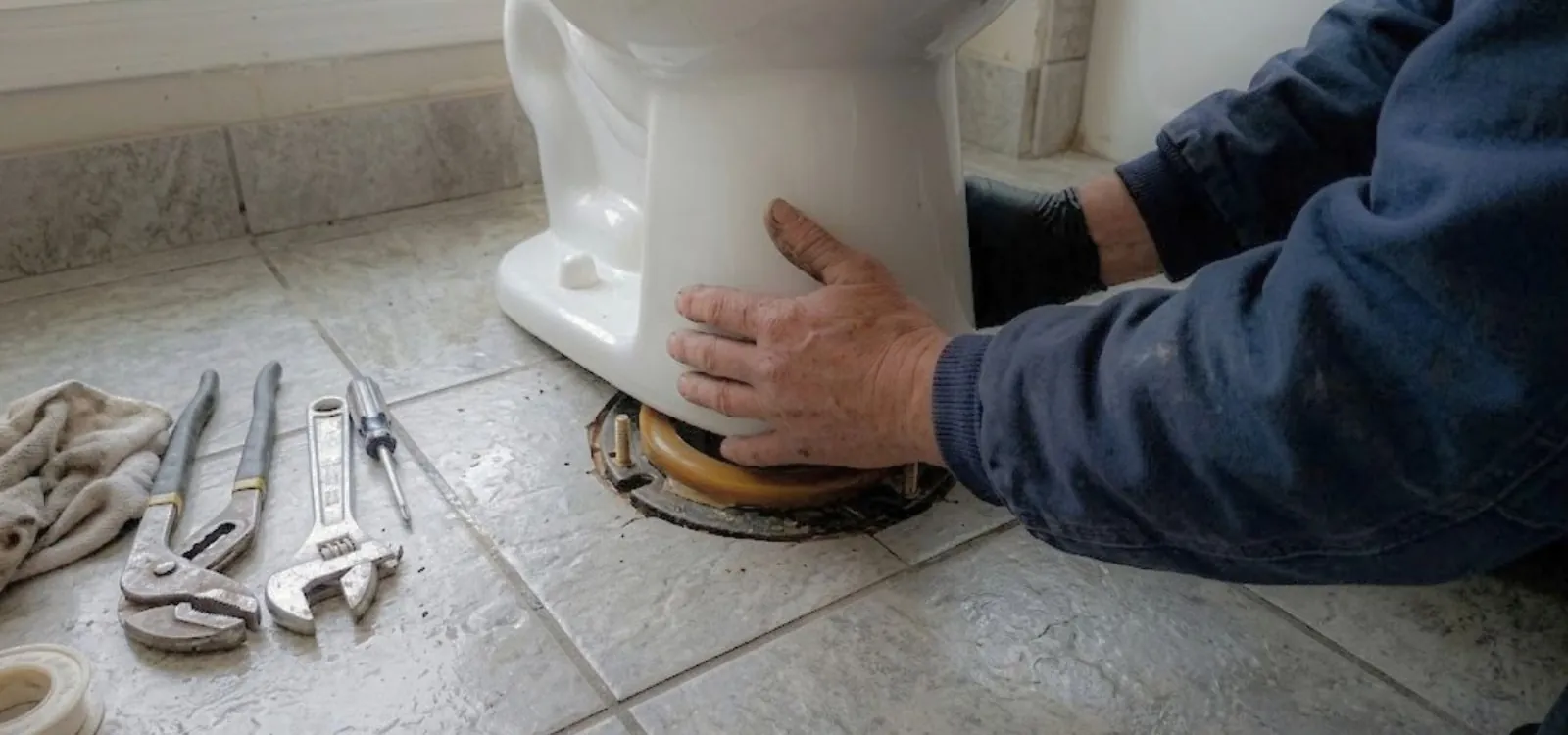
The wax ring sits between the toilet horn and the closet flange, the ring bolted to the floor above the drain. It keeps sewer gas in the pipe and water out of the subfloor. When it fails, you often smell it before you see it.
We pull the toilet, clean the old wax from the flange, and inspect the flange itself. A cracked or corroded flange, or one sitting below the finished floor, needs a repair ring or a replacement before a new wax ring will seal. Setting a toilet over a broken flange is how the same leak returns in a month.
Rot is the risk. A slow leak under a toilet can soften the plywood around the flange, and the toilet then rocks even with fresh bolts. If the floor flexes, we stop and tell you what carpentry the subfloor needs before the toilet goes back.
Clogs: plunger, closet auger and when it is the drain
A flange plunger with a rubber extension seals the bowl outlet and moves water in both directions. Use steady strokes, not a few hard shoves. A closet auger, a short cable with a protected tip that will not scratch porcelain, reaches the trap bend where most wipes and toys stop.
We avoid chemical drain openers in toilets. They sit in the bowl, they do not dissolve what usually blocks a toilet, and they burn when a plumber has to work through them afterward.
When the toilet clears but the tub gurgles or another fixture backs up, the cause sits beyond the bowl. Our drain cleaning crew uses a sectional cable machine for that, and a push camera shows what was in the pipe.
Replacing or installing a toilet
Some toilets are worth repairing and some are not. A fresh flapper in a sound toilet is cheap and quick. A cracked tank, a glaze-crazed bowl or one that clogs weekly is better replaced, because new parts will not fix a bad trap design.
WaterSense labeled toilets use 1.28 gallons per flush or less, according to the EPA. The federal maximum is 1.6, so a labeled model uses about 20 percent less water per flush. That matters in a house with several bathrooms and a bill you watch.
Fit matters as much as water use. Measure from the wall to the center of the closet bolts, called the rough-in. The common size is 12 inches, but older homes vary. Round and elongated bowls have different footprints, and a switch may need clearance checked against the vanity and door.
Taller and accessible bowls
Comfort height bowls sit a couple of inches higher, which helps knees and hips. Tell us who uses the bathroom, and we can talk through seat height, grab-bar blocking behind the wall and bowl shape before you buy.
Bidet seats and smart toilets
Electric bidet seats need a nearby grounded outlet and a water tee on the supply. We handle the plumbing side. Any new outlet is electrician work, and we will say so up front rather than run a cord across a wet floor.
Permits and what we leave to others
Inside the city, the Division of Building Inspection at City Hall (440-951-2800) issues plumbing permits. Lake County Building Department handles many nearby towns, including Willoughby Hills and Willowick. A like-for-like toilet swap often needs none, but moving a toilet or adding a bathroom does, so ask before work starts.
We work under the Ohio Plumbing Code, which follows the 2021 International Plumbing Code as amended by Ohio. We do not cut walls for new vents or run new circuits. Where framing or wiring is needed, we name the trade and coordinate the order of work.
Older homes on the Willoughby and lakeshore side
Willowick and Wickliffe both have a median home built around 1957, according to Census data. Bathrooms from that period often still have original shut-off valves, and those stiff stops are the first thing to leak or refuse to close when you need them. We replace a seized stop at the same visit, so the next emergency has a working valve.
Downtown Willoughby has older buildings too, so a fixture swap sometimes uncovers corroded supply fittings or a flange set at an odd height. We tell you what we find before we continue, and the same applies in Willowick and other lakeshore towns.
Toilet repair and installation cost drivers
A simple flapper or fill valve repair and a full flange rebuild sit far apart, so a single number would mislead you. We give a clear price before work starts, after we have seen the toilet or heard enough on the phone to quote responsibly.
Repair or replace
A part swap costs far less than a new fixture, but a worn toilet may need a second repair within a year.
What is under the toilet
A bad flange, rotted subfloor or seized closet bolts add parts and time.
The toilet you choose
Bowl shape, flush system, height and brand drive the fixture price more than the labor.
Old toilet removal
Hauling away a heavy porcelain bowl and cleaning the floor takes real effort, so we tell you how it is handled.
After-hours calls
A night or weekend dispatch differs from a scheduled visit. Ask when you call.
Insurance note. Homeowners insurance usually covers sudden water damage, such as a burst supply line. It often excludes a gradual leak from a worn wax ring and the toilet itself, so call for your number.
While you wait for the plumber
These steps limit damage and help us bring the right parts.
Close the stop valve
Turn it clockwise behind the bowl. Our toilet repair visits go faster when the supply is already off.
Lift the flapper if water still rises
Remove the tank lid and press the rubber flapper into its seat. Do not flush again.
Move the bath mats and rugs
Put towels at the door to keep water off hallway floors and out of the bedroom carpet.
Note the make and flush type
A photo of the tank label and the shape of the bowl helps us bring the right parts.
Photograph any damage
Take pictures of the water, stains and affected materials for your insurance claim before cleanup.
Toilet questions we hear most
Yes. Our 24/7 emergency line takes toilet calls at any hour, including overflow, a cracked bowl or a rocking base. Call (440) 468-0237, tell us whether the water is clean or sewage, and shut the stop valve behind the bowl while you wait. We confirm timing when we answer, because it depends on the call volume that night.
If the bowl and tank are sound, repair. New flappers, fill valves and wax rings restore most toilets. Replace when you see a crack, constant clogging, a rough interior glaze or a model that wastes water on every flush. We tell you which applies after looking at it, even if that means the cheaper repair.
Usually the flapper no longer seals, the chain is tangled, or the fill valve will not shut off. A food coloring test in the tank tells you which one. Running toilets waste water quietly and can raise a bill noticeably, so repair them even if the sound seems minor.
Yes. Bring the model information, or send us the box label when you call, so we check the rough-in and the bolts. We supply a new wax ring or a wax-free seal, a supply line and a stop valve if needed. We cannot warranty the fixture itself, only our installation work.
Not if it is a good model. WaterSense labeled toilets at 1.28 gallons per flush or less must pass an EPA waste-removal test. Early low-flow toilets earned the reputation. A modern one clogs from too much paper or wipes, not from the water volume.
Yes, when it is cracked, corroded or sitting too low. We use a repair ring or replace the flange, depending on what the pipe below allows. If the subfloor has rotted around it, we stop and explain what carpentry is needed before resetting the toilet.
We serve Willoughby and nearby towns, including Eastlake, Willowick, Willoughby Hills, Wickliffe and Mentor. Call (440) 468-0237 with your address and we confirm coverage and availability. We offer same-day appointments when available, so ask when you call. A fixture swap in Mentor or Wickliffe follows the same steps as one in Willoughby, though the local permit office differs.