
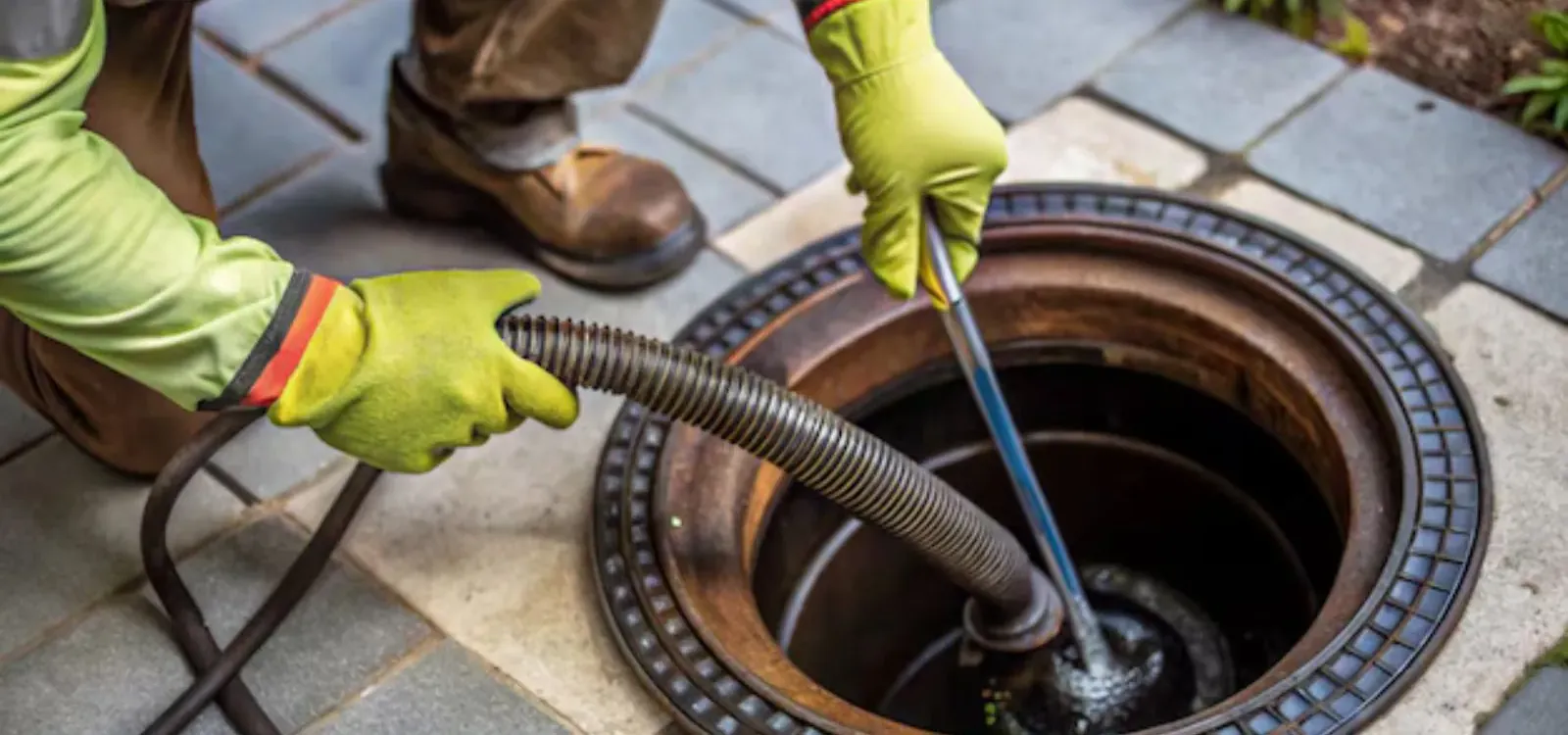
Hydro jetting in Willoughby, OH means feeding a hose with a pressurized nozzle through a cleanout and washing the inside of the pipe clean. A cable punches a hole through a blockage. A jetter strips the pipe wall all the way around, which is why it holds longer on greasy kitchen lines, scaled cast iron and roots.
It is not the answer to every clog and it is not safe on every pipe. We look at the line with a camera first when the age or condition is unknown, and we tell you if a different tool is the better choice. If your main line has stopped and you need it open tonight, our 24/7 emergency line takes jetting calls too.
What a cable leaves behind that a jetter takes off
A cable works like a corkscrew through a pipe. It bores a path, the water follows, and the drain looks fixed. The coating of grease, scale and fine root hairs on the pipe wall stays where it was, narrowing the opening every few months until the next backup.
A hydro jet nozzle works differently. Water leaves the nozzle through angled ports, and the rear-facing ones pull the hose forward while the spray scours the wall. Debris is carried back toward the cleanout and out, instead of being pushed ahead to lodge again further down.
That difference is why a kitchen line that clogs every two or three years is a classic jetting job. The owner has been paying to open the same hole again and again, and the wall coating was never removed.
Match the blockage to the tool
Jetting costs more than a cable visit, so it should be used where it earns the difference.
| Situation | Better tool | Why |
|---|---|---|
| One bathroom sink, hair clog | Small cable | A simple obstruction that a cable pulls out in one pass |
| Kitchen line that clogs every few years | Hydro jet | Grease coats the whole wall, so cabling only opens a channel |
| Roots reaching the sewer lateral | Jet with root cutting nozzle or cable blade, then camera | Roots regrow, so the cut must be followed by a look at the joint they entered |
| Scaled cast iron in an older home | Jet after a camera check | Scale comes off well but thin or cracked metal needs to be seen first |
| Broken, offset or collapsed pipe | Neither. Camera and repair | Water and cable can both make a failed section worse |
Not sure a jetter is the right tool?
Call (440) 468-0237. Tell us what has been tried and where it stopped, and we will say which tool fits.
Signs a line needs jetting, not another snaking
The same drain, a third time
If it cleared and returned, the wall has material the cable did not touch. Jetting is the next logical step.
A cable that stuck or snapped before
A previous plumber's snake hung up partway. We camera the line first so we know whether it is a foreign object, a joint or a bend.
Sewer gas smell from buildup
Decaying material on the wall releases an odor even when water drains. Cleaning the wall removes the source.
Roots in a camera report
A report that shows root hairs at joints calls for cutting and scouring, usually on a schedule that your line's condition sets.
A rental that backs up between tenants
Shared lines with heavy use build up faster. Jetting the building drain before the next move-in avoids a midnight call.
Main line stopped and the cable did not hold
If a cable cleared the line yesterday and sewage is back today, the blockage was never removed, only moved. A main line that backs up into a basement bathroom or floor drain should not wait for a convenient day, since every flush adds more to the floor.
Stop using water and tell us what was tried. A jetter can run on the same visit when conditions allow, as long as the line is not damaged. If a camera shows a collapsed section, jetting is the wrong tool and the conversation turns to a repair.
Before the jetting truck arrives
Free the cleanout
A jetter hose needs an opening at the line, usually a capped cleanout. Move storage, laundry baskets and furniture so we can reach it with a hose reel.
Tell us about the pipe
Note the age of the house, any past sewer work and whether anyone has told you the pipe is cast iron, clay or plastic. It decides pressure and nozzle choice.
Keep drains quiet
Do not run water or flush while the hose is in the line. A sudden discharge can mix with jetting water and find the lowest drain.
Cover floor drains in the basement
A floor drain is the escape route if pressure pushes water back. We cap or plug it for the visit when possible.
One jetting visit, start to finish
- 1
Camera pass first when the pipe is unknown
A push camera shows the pipe material, roots, offsets and cracks. If the pipe is failing, we stop and discuss repair rather than run water through it.
- 2
Set the nozzle for the blockage
A forward-cutting head works through a hard plug. A wider spray head scours the wall. A root-cutting head is chosen when the camera shows root mass.
- 3
Feed the hose in stages
The hose goes in slowly, working back and forth over the worst sections. Pressure is kept at a level suited to the pipe's age, not turned to maximum.
- 4
Pull back and flush
As the hose is retracted, the rear jets drive loosened debris to the cleanout. We keep going until the water coming back looks clean.
- 5
Camera pass after
A second look confirms the wall is open and shows anything the first pass could not, such as a sag holding water or a joint that still has roots.
Roots: what jetting fixes and what it only delays
Roots enter through joints and cracks because the pipe carries warm, nutrient-rich water. A jetter with a cutting head clears them quickly, and that restores flow right away.
It does not close the gap they came through. If the camera shows roots at one joint, expect them back unless the joint is repaired or lined. Ask us to mark the location of the entry point on the pass, because that number is what a repair estimate starts with.
For the line itself, see sewer line repair when a joint is open, and sewer camera inspection if you only want the pictures without a cleaning.
Where jetting should not be used
Jetting is the wrong choice on a pipe that is cracked, broken, collapsed or badly offset. Water under pressure finds the gap, can wash soil out around the pipe and can leave a void that makes the damage worse.
Pipe of mid-century age may be clay, cast iron or fiber. A camera tells us which. If you are in a 1950s lakeshore house, which is typical in Willowick, we start with the camera. Our Willowick plumbing page covers that housing in more detail.
Buying a house or taking over a rental
Callers often ask for jetting before closing on a house, hoping a clean line means a good line. A clean line only means it is clean today. A camera pass before and after jetting is the useful pairing, since it separates a pipe that needed cleaning from a pipe that needs repair.
Ask the seller for any past sewer work and check whether your town requires a point-of-sale inspection. In Willowick and Wickliffe, ask the city whether a point-of-sale inspection applies before listing a house. We can provide what the camera shows, and you decide what to negotiate.
Why Willoughby lines see scale, grease and storm stress
The Willoughby-Eastlake Water Pollution Control Center on Erie Road in Eastlake treats what the city's sewers collect. Your lateral is the private end of that system. If the main in the street is clear but your lateral is coated, jetting your lateral is the correct scope, and the city sewer division handles the main.
Lake County Building Department lists frost depth at about 40 inches in its design table. A lateral is buried underground, so the cleanout is the practical access point and digging is not part of a jetting visit. We work from it with a hose and a camera, which keeps the yard intact.
After a heavy storm, debris and silt can enter a line that is cracked or loose at a joint. If you have had basement water in a storm year, camera-check the lateral before assuming the next backup is a pure clog.
What drives the cost of hydro jetting
Price is the first thing callers ask, and the honest answer is that the line itself sets it. Length, diameter and what is coating the wall decide the scope, and you get a clear price before work starts.
Length and diameter of the line
A short four-inch lateral and a long run to the street are different amounts of hose, water and time.
How much is coating the wall
Soft grease comes off in one pass. Hard scale and root mass need slow, repeated passes.
Access to the cleanout
Without a cleanout, we may have to pull a toilet or work from a vent, which adds steps.
Camera before and after
Pairing jetting with a camera pass adds time but separates a clean pipe from a failing one, so the work is based on what we saw.
Whole house or main only
The main and the branch lines inside the house are separate scopes. Tell us whether you want one or both.
Insurance note. Homeowners policies usually treat jetting as maintenance you pay for, though sudden sewage backup may sit under a separate endorsement, so check with your agent and call for your number.
Standards that govern jetting work
Hydro jetting does not replace a camera look at the pipe. The Ohio Plumbing Code, which is based on the International Plumbing Code (IPC), requires a cleanout for access. Manufacturers of old clay and cast iron lines warn against high pressure on cracked pipe, so a camera pass comes first when the line's condition is unknown.
Hydro jetting questions we get in Willoughby
It depends on what the pipe is and how it looks inside. We run a camera first when the age or material is unknown. Sound cast iron and plastic take jetting well. Cracked, collapsed or fiber pipe may not, and we stop and tell you instead of pushing ahead.
Yes, through our 24/7 emergency line at (440) 468-0237. Tell us about backups, what you tried and whether there is a cleanout. We will say what the visit looks like and what we can do tonight. Until we arrive, stop using water and keep the cleanout clear.
No. It cuts and washes them out, which restores flow, but roots return if the entry point stays open. Ask for a camera pass so the joint they came through is located. A repair or lining is what ends the cycle.
Jetting alone is fine for a known grease problem in a pipe you trust. With a camera you see the pipe before and after, which matters if the line is old, the clog is a repeat or the house is being bought or sold.
There is no set number of years. A kitchen line that clogs every two or three years may be jetted on that rhythm. A clean line after a camera pass may not need anything for a long time. Look at what the camera shows and decide from that.
Either. The main is jetted from the cleanout. Branch lines inside the house are reached from floor drains and fixture openings. Tell us which fixtures are slow and which drains gurgle, and we will scope the visit to those lines instead of cleaning pipe that is already open.
We offer same-day appointments when available, and a stopped main is handled through the 24/7 line. Call us at (440) 468-0237, describe the backup and what has already been tried, and we will tell you what is open and whether a jetter or a cable is the first move.