
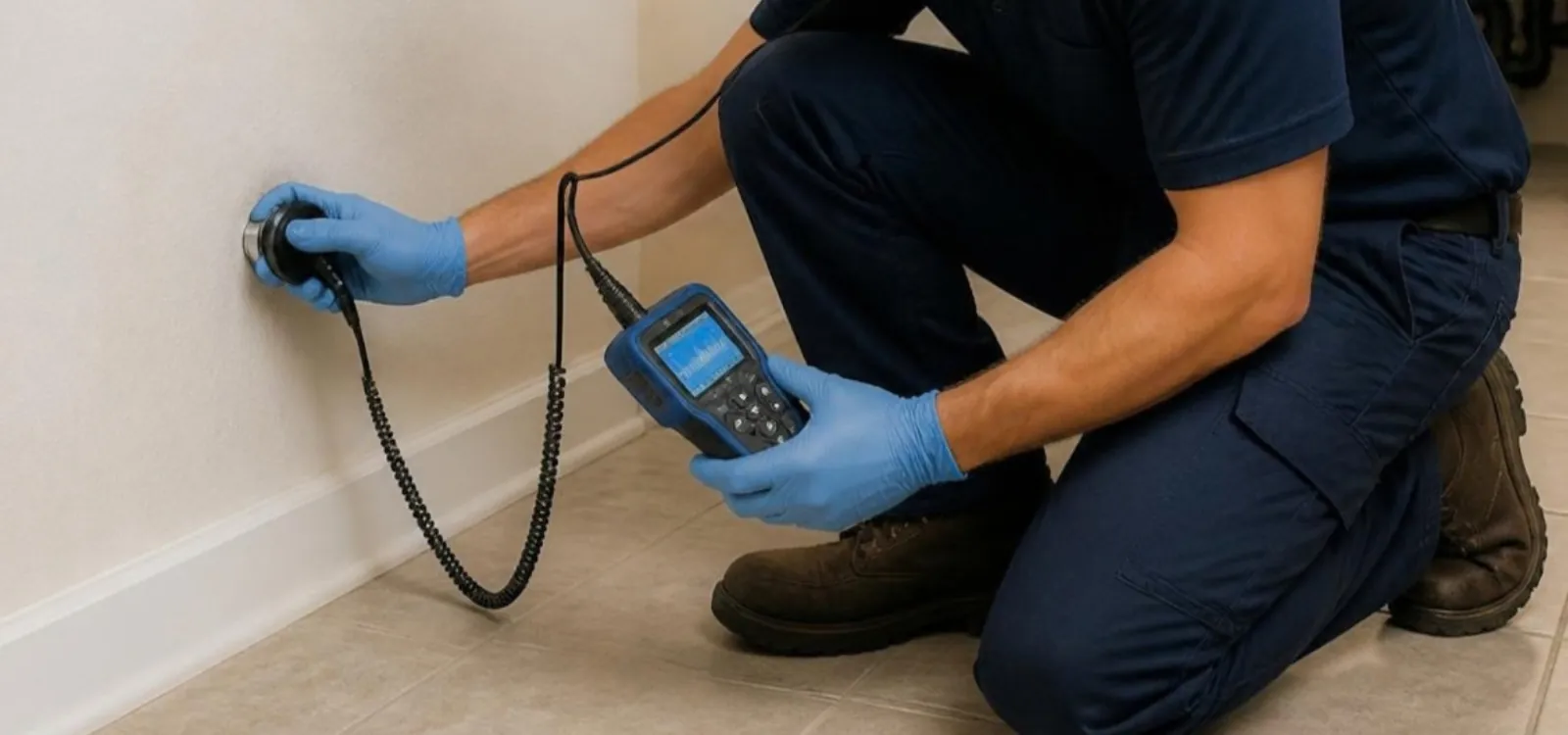
Leak detection in Willoughby, OH is the work of finding where water is escaping from a pressurized pipe when nothing is visible. That might be a line inside a wall, under a slab, or buried between the street and your foundation. The goal is a marked location, so the repair opens one small area instead of half a room.
If water is already running across a floor or through a ceiling, call our 24/7 emergency line at (440) 468-0237 and then shut off the main valve while you wait. If the only clue is a spinning meter or a bill that does not match your habits, start with the meter test below. It takes about ten minutes and tells us whether the leak is inside the house or out in the yard.
Many callers have already paid a plumber who could not find the source. We work from the outside in: confirm that a leak exists, narrow it to a zone, then pinpoint it with the right instrument for that pipe material and depth.
Ten minutes at the meter before you call
This test costs nothing and rules out the most common false alarm, a toilet that leaks into the bowl.
- 1
Stop every water user
Close all taps, turn off the ice maker and dishwasher, and make sure no one flushes. Check that the softener is not in a regeneration cycle, since that draws water on its own.
- 2
Read the meter
Find the small triangle or star on the dial, often called the low-flow indicator. If it spins with everything off, water is leaving the system somewhere. Write the reading down, wait twenty minutes without using water, and read it again.
- 3
Drop dye in each toilet tank
Add a few drops of food coloring to the tank and wait before flushing. Color in the bowl means the flapper is leaking. A silent flapper leak can waste a surprising volume and push the meter on its own.
- 4
Close the main shut-off
Shut the valve where the line enters the house, then watch the meter. If it still moves, the leak is on the buried run between the meter and your valve. If it stops, the leak is inside the building.
- 5
Check outdoor and irrigation lines
Look at hose bibs, sprinkler zone valves and any line running to a garage or shed. A stuck irrigation valve can look exactly like a house leak on the meter.
When a hidden leak is an emergency
Some leaks can wait for a scheduled visit. Others cannot. Water dripping from a light fixture, a ceiling that is bowing, water pooling near the electrical panel, or a floor that feels warm and wet all need the main shut off now.
Turn the main valve clockwise until it stops, then open the lowest tap in the house to relieve pressure. Stay out of any room where water is touching outlets or the panel, and shut off power to that area only if you can reach the breaker without standing in water.
Then call (440) 468-0237. We run a 24/7 emergency line, and we offer same-day appointments when available. Tell us what you shut off and where the water is showing, because that shapes what we load on the truck.
Meter still moving after the test?
Call the line and tell us what the dial did. That answer decides which instrument we bring.
What you see, where the water usually is, how we confirm it
The visible symptom is rarely above the break. Water follows pipes, framing and gravel, so we match the clue to the likely zone first.
| What you notice | Likely location | How we confirm it |
|---|---|---|
| Meter moves with the main valve closed | Buried line between meter and house | Pressure gauge test on the isolated line, then acoustic listening along the route |
| Meter stops when the main is closed | Inside walls, floors or fixtures | Zone isolation, thermal camera, moisture meter and listening on pipe contact points |
| Warm spot on a floor or hot water runs long | Hot line in or under a slab | Thermal camera scan, then listening to narrow the span |
| Ceiling stain under a bathroom | Supply, drain or shower pan above | Moisture mapping, then pressure test on supply lines separately from drains |
| Soft or unusually green ground outdoors | Buried service line or irrigation | Acoustic ground microphone, tracer gas where the line material allows |
| Rising bill, nothing visible | Slow drip at a joint or a running toilet | Dye test and meter test, then fixture by fixture isolation |
These are starting points. We confirm on site before any wall or floor is opened.
While you wait for the technician
A few minutes of preparation saves time at the door and limits damage.
Know your main valve
Find it before we arrive and make sure it turns. A valve that is seized is worth telling us about on the phone.
Photograph the evidence
Take pictures of the stain, the meter reading and the wet area with a timestamp. Your insurer and the water utility both ask for this kind of record.
Clear a path
Move furniture away from the wet wall or floor and clear access to the basement meter and water heater. Listening work needs quiet, so turn off radios, dehumidifiers and loud appliances if you can.
Protect what you can lift
Pull rugs, electronics and stored boxes off wet floors. Set a bucket under any active drip, and leave ceiling bulges alone unless water is actively pouring through.
Instruments we use, and what each one cannot do
No single device finds every leak. Pressure-fed leaks make sound, give off heat or lose pressure, and we use whichever signal the pipe material actually produces. Plastic lines carry sound poorly, while copper and steel carry it well, so the plan changes with the pipe.
Acoustic listening
A ground microphone or a contact sensor picks up the hiss of pressurized water escaping. It works best on metal pipe at night or off-peak, when background noise is low. It struggles on plastic lines and deep leaks, so we pair it with a second method.
Thermal camera and moisture meter
A thermal camera shows temperature differences on a wall or slab surface, which is useful for hot water lines and for damp insulation. It reads the surface only. We confirm any hot spot with a moisture meter before calling it a leak, because cold drafts and ducts can imitate one.
Pressure gauge test
We isolate a section of line, pressurize it to the working level and watch a gauge. A falling needle proves a leak exists in that section, which is how we split a house into zones and avoid guessing.
Tracer gas
For leaks the other tools cannot settle, a harmless tracer gas is pushed into the emptied line and a handheld sniffer finds where it escapes through the floor or soil. It is slower to set up, so we use it when sound and heat leave doubt.
Push camera with locator
When the suspect is a drain rather than a supply line, a push camera with a sonde lets us see the pipe and mark its depth at the surface. It helps separate a drain leak from a supply leak. For sewer problems specifically, see our sewer camera inspection page.
Situations where people call us
The same instruments are used differently depending on the property and the question being asked.
The bill climbed and nobody knows why
We start with the meter test, check every fixture for silent flow, and only then move to hidden lines. Often the answer is one toilet, which is a cheap fix.
A prior plumber could not find it
Bring what they tried. If they tested only the supply, we look at drains and fixtures. If they opened a wall on a guess, we test first so the next opening is the right one.
A house is being sold
A buyer's inspection flags a stain or high usage and the deal stalls. A documented pressure test and a marked leak location gives both sides a clear number to work from.
Concrete slab floors
Water coming up through a garage or basement floor usually means a line under the concrete. We locate it, mark it and explain whether breaking the slab or rerouting overhead makes more sense.
Why Lake County soil and weather change where we dig
Soils across the Chagrin River watershed are mostly clayey glacial till that drains slowly. Water leaking from a buried line tends to travel along the loose trench backfill before it reaches the surface. The soft patch in your yard may sit well away from the actual break, which is why we pinpoint with a ground microphone before anyone digs.
Willoughby's Osborne Park shoreline project began because erosion along Lake Erie was exposing storm sewer and water lines. Homes near the bluff, including those toward Willowick, should test a long-running leak early instead of waiting, since shifting ground strains buried pipe.
Source: Chagrin River Watershed Partners watershed plan, Ohio Department of Natural Resources bluff geology, City of Willoughby Shoreline Protection Project
After we find it: repair, paperwork and the utility bill
Once the spot is marked, you have choices. We can repair it, you can hire your own contractor and keep our report, or we can quote a reroute where opening a finished surface would cost more than running a new line. Where the break is a cracked or split pipe, our burst pipe repair work picks up from the marked location.
A leak on the buried run between the meter and the house is a water line repair job, and pipes that fail again and again may point toward replacing the supply lines in the affected area. We will tell you which of those fits your situation instead of defaulting to the biggest job.
Your water bill after a leak
Lake County Utilities customer service at 440-350-2070 (Monday to Friday, 8:00 to 4:30) can tell you whether they offer any billing adjustment and what proof they want. We cannot promise an adjustment, but a dated test report and repair record are the documents most utilities ask for.
Property managers and commercial sites
We trace leaks in apartment buildings, plazas and small commercial units, including commercial plumbing callouts after hours. We isolate by riser and unit so the owner can see which unit is losing water. Fire sprinkler mains and grease trap pumping are separate trades that we do not perform, so we will say so at the start and suggest who to call.
What leak detection costs and what drives it
Detection is priced by the effort needed to isolate the leak, not by a flat menu. A fixture-level leak found in the first stage is a short visit. A buried line under a driveway or a slab leak needs more instruments and more time. We give you a clear price before work starts, and we explain what the diagnostic visit covers so there are no surprises.
Pipe material and depth
Copper and steel carry sound well. Plastic lines and deep runs need extra steps such as tracer gas or pressure zoning.
Access to the pipe
Open basement joists are simple. Finished ceilings, tight crawl spaces and sealed slabs take longer to read.
How many leaks and zones
One leak is a straight search. A house with several small leaks needs each zone isolated and retested.
Property size and type
A single-family home, a duplex and a commercial unit have different pipe runs and scheduling needs.
Repair after location
Marking the spot is one cost. Opening a wall, digging a trench or rerouting a line is a separate job priced on its own.
Insurance note. Homeowners policies often cover the damage from a sudden, accidental leak and sometimes the cost of finding it, but they usually exclude slow seepage and the pipe repair itself, so call your insurer and then call us for your number.
Code notes on locating and repairing leaks
Once a leak is found, the repair has to meet the Ohio Plumbing Code, which is based on the International Plumbing Code (IPC). A slab or wall opening may need a permit, and a leak between the meter and the house is the water utility's concern only up to the point your service line begins.
Leak detection questions from Willoughby homeowners
Yes. Our emergency line at (440) 468-0237 is staffed 24/7, including weekends and holidays. If water is actively flooding a room, shut off the main first, then call and tell us what you see. We schedule same-day appointments when available and will explain the plan for the visit when we call you back.
Usually yes to narrow it down and often to pinpoint it. A thermal camera, moisture meter and listening device find most wall leaks without cutting. We confirm the spot with at least two readings before marking it, then open the smallest area possible to reach the pipe.
Yes, in most cases. Many people only want the location because they plan to repair it themselves or use another contractor, and that is fine. We hand over a marked location and a short report either way. Tell us your preference when you call.
We locate it with sound and heat first. Then we explain your options, which are usually breaking the slab at the marked spot or rerouting the line through the attic or walls. The right pick depends on the length of the line and the floor finish, so we price both when it makes sense.
Shut the main valve at the house and watch the water meter. If the dial keeps moving, the leak is on the buried line between the meter and the house. If it stops, the leak is inside. That one test saves a lot of money on the diagnostic visit, so try it before you call.
Yes, for water supply leaks, floor drains and fixture problems, including after hours. We do not service fire sprinkler mains or pump grease traps. For multi-unit buildings we isolate by riser and unit so the owner can see which unit is losing water.