
A sump pump that quits during a storm leaves your basement exposed to rising groundwater, and our line at (440) 468-0237 answers 24/7. If water is reaching outlets or the electrical panel, stay out and call an electrician or your electric utility. Otherwise move belongings off the floor while you wait for us.
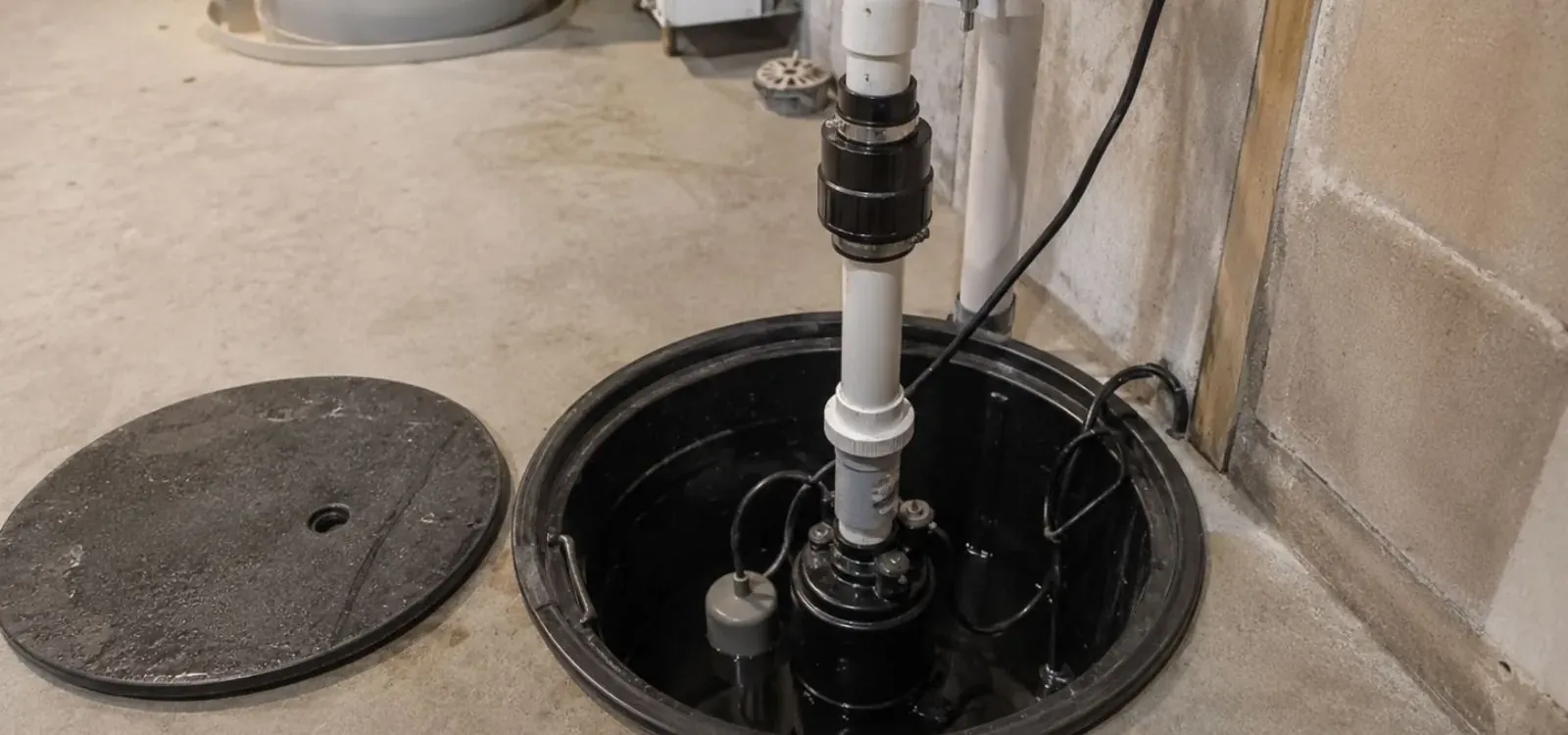
Sump pump repair in Willoughby, OH starts with understanding the system. It is a basin in the lowest part of the basement, a pump with a float switch, and a discharge pipe that carries water outdoors. When groundwater rises around the foundation, the basin fills, the float lifts, and the pump pushes the water out before it reaches your floor.
How a sump pump failure usually unfolds
The pattern is familiar. Heavy rain soaks clay soil that drains slowly, groundwater climbs against the foundation, and the basin starts cycling every minute or two. Then one of four things gives out: the power, the float, the pump motor, or the discharge line. The pump may hum, run without moving water, or sit silent while the basin brims.
Power is the failure you cannot see coming. On April 1, 2026 the Chagrin River rose above 14 feet, and news reports from Willoughby Hills described flooded basements and power outages that disabled sump pumps. That was Willoughby Hills, not the city of Willoughby, but storms that fill basins also take down electric service. A pump with no backup power protects you only on dry days.
Pump dead and water rising: what to do first
Check the simple things before anything else. Look at the outlet the pump is plugged into, since some sump pumps share a ground fault circuit interrupter (GFCI) outlet that trips in damp conditions. If the outlet has a reset button, press it once. Do not reach into water to do this, and do not touch the pump or its cord while standing in water.
If the basin is full and the pump is silent, reduce what is arriving. Stop running the washing machine and dishwasher if they drain toward the basin, and shut off any outdoor spigots. Then call us. Bailing the basin with a bucket buys time, and you can carry the water outside and away from the foundation.
Pump quit or never kicked on?
Call the 24/7 line and tell us what you hear and see in the basin.
While you wait for the technician
Small steps now protect your belongings and speed up the diagnosis.
Lift valuables
Move boxes, electronics and anything cardboard onto shelves or furniture above the floor. Wet cardboard is the first thing to go in a basement flood.
Watch the electrical hazards
If water reaches outlets, power strips or the panel, do not walk through it. Shut power off at the main only if the panel is dry and you can reach it safely, otherwise call an electrician.
Look at the basin
Note whether the water level is rising or holding, whether the float is stuck against the side, and whether you can hear a hum. Tell us exactly what you see.
Check the outside discharge
Walk to where the pipe exits the house. Ice, a crushed end or a clogged screen can stop the flow, and clearing it can restore the pump.
Photograph for insurance
Take photos of the basin, the water line on the walls and damaged items before cleanup starts.
What the pump is telling you
Pumps announce their problems before they quit. Here is how the usual symptoms read to a technician.
| What you notice | Likely cause | What the repair involves |
|---|---|---|
| Pump silent, basin full | Dead power, tripped GFCI, stuck float or burned-out motor | Test the circuit first, then free or replace the float, then replace the pump if the motor is dead |
| Pump hums but water barely moves | Jammed impeller, clogged intake or a worn motor | Pull the pump, clean the intake, and replace it if the impeller is damaged |
| Pump runs, water falls back after each cycle | Failed or missing check valve on the discharge pipe | Install a new check valve, which also stops the short-cycling it causes |
| Pump cycles every few minutes in dry weather | High groundwater, a leak into the basin, or backflow from the discharge | Trace the source of the water and check the discharge line and check valve |
| Loud rattling or grinding | Debris in the basin or worn bearings | Clean the basin, then replace the pump if the noise continues |
A pump that cycles constantly with no obvious reason is worth a visit before the next storm, not after.
Where the water goes: Willoughby's discharge rule and winter freezing
Willoughby Sec. 915.04 prohibits connecting sump pumps, roof downspouts, foundation drains and areaway drains to a building sewer that ties into the public sanitary sewer. Stormwater must go to a storm sewer or an approved natural outlet. If a previous owner plumbed the pump into the sanitary line, that connection needs to be corrected, because it loads the sewer in the storms that already stress it.
Where the pump discharges outside matters just as much. Clay soils in the Chagrin River watershed are generally poorly drained, so water dumped beside the foundation soaks back toward the wall and returns to the basin. Extend the pipe well away from the house and keep it sloped so it empties completely.
Winter is the other discharge problem. The Cleveland area averages 63.8 inches of snow a year, and water left sitting in an outdoor pipe freezes solid. A discharge that cannot empty freezes shut, the pump cannot push, and the basin overflows during a thaw. We check pitch and the exit point for that reason.
Permits depend on the town. The city of Willoughby issues its own, while Willowick and Willoughby Hills use the Lake County Building Department, a note we also cover on our Willoughby Hills service page.
Backup power: choose for the outage, not the brochure
A backup is a second pump or a second power source that takes over when the main pump or the grid fails. The right choice depends on how often your basin runs and how long your outages last in practice.
Battery backup pump
A battery system pairs a second pump with a deep-cycle battery and charger. It turns on when the main pump fails or the power drops. Run time depends on the battery size and how fast water arrives. In a heavy inflow, a battery may last hours, not days, so it covers an outage but not a week of storm recovery.
Water-powered backup
Some backups run on municipal water pressure and need no electricity. They send a lot of clean water down the drain to move the groundwater, and they depend on adequate supply pressure. We rarely recommend them for homes on metered water, though we will talk through your situation.
High-water alarm and standby generator
A high-water alarm costs little and tells you the pump is losing before the floor floods. A standby generator wired to the sump circuit protects the whole basement, but the generator and its transfer switch are an electrician's job. We will install the pump side and coordinate the rest.
Replacing the pump: what the technician checks
A good replacement is more than swapping the motor. We look at the basin first, because a cracked, undersized or silt-filled basin shortens any pump's life. We confirm the float has room to swing without touching the side wall, and we install a new check valve on the discharge so water does not fall back into the basin after each cycle.
Sizing matters. A pump is rated by the gallons per minute it moves against a given height, called head, and your discharge has to lift water from the basin floor to the outside exit. A larger motor is not automatically better, since an oversized pump can short-cycle. Before leaving, we fill the basin with a hose and watch the pump through a full cycle to confirm it starts, empties and shuts off.
A pump that is old and untested is a gamble. If you cannot remember when yours was last replaced, ask for a test before spring and fall storm seasons. A related job is a sewage ejector, which is a sealed basin and a different pump for toilets below the sewer line. It is a separate repair, and we can install new basement plumbing around one.
The Chagrin River record, city by city
Willoughby sits along the Chagrin River, and the stream gage at Willoughby recorded its largest peak, 28,000 cubic feet per second, on March 22, 1948. A 23,900 cfs peak followed in May 1989, and the July 2006 flood, with over 11 inches of rain in Lake County, peaked at 19,100 cfs. Two earlier peaks beat 2006, so plan a pump for more than the storm you remember.
Several recent events hit Willoughby Hills specifically. An ice-jam flood warning on February 1, 2025 covered the Chagrin near Chardon Road and Willoughby, with ice-jam flooding along Milann Drive in Willoughby Hills. Flash flooding followed there on July 6, 2026, three months after the April 1, 2026 basement flooding. If you live in Willoughby Hills, a backup pump is worth pricing before the next one.
The Chagrin River Partnership notes that unprotected low areas of Eastlake and Willoughby flood at high stage, and that major flooding occurs along the river from Willoughby Hills to Eastlake. If your home sits on low ground near the river, your basin may run the longest, so test the pump before storm season.
Source: USGS Chagrin River gage records, Chagrin River Partnership watershed plan, and Cleveland-area news reports
When the pump is fine and the basement is still wet
A pump can only move water that reaches the basin. If the basin stays quiet while the floor is wet, the water is entering somewhere else: through the wall-to-floor joint, through a crack, from a window well, or from a leaking pipe. A working pump does not fix any of those.
That is a different diagnosis, and we are honest about where it ends. We can add an interior drain that routes water to your basin, trace downspouts and test plumbing for leaks, but crack injection, exterior excavation and wall repair belong to a structural waterproofing or foundation contractor. Our basement waterproofing page draws that line in detail.
What drives the cost of sump pump work
A pump swap in an accessible basin is one kind of job, and a new basin in a finished basement floor is another. These factors set the price.
Repair or replace
A stuck float or a bad check valve is a small repair. A burned-out or old pump usually means a replacement.
Pump type and size
Submersible and pedestal pumps differ in price, and the flow rating you need depends on how much water arrives and how high it must be lifted.
New basin or existing
Cutting the floor, digging the pit and setting a new basin adds labor and concrete patching.
Backup system
A battery backup, alarm or second pump adds equipment and some wiring. Generator tie-ins need an electrician.
Discharge work
Moving the exit away from the foundation, correcting a sanitary connection, or protecting the line from freezing adds pipe and time.
Insurance note. Homeowners insurance often excludes sump pump failure and groundwater seepage unless you carry a water backup endorsement, and it usually will not pay to replace a worn-out pump, so call for your number and ask your insurer about that endorsement.
What the code says about sump systems
The Ohio Plumbing Code, which is based on the International Plumbing Code (IPC), covers the sump basin, check valve and discharge piping. Discharge must go to a permitted point and never to the sanitary sewer. Keep the pump's plug dry and off an extension cord that runs across standing water.
Sump pump questions from Willoughby homeowners
Yes. Our line at (440) 468-0237 is staffed 24/7, including nights, weekends and storm days. Tell us what the basin and pump are doing, and we will explain the next step. We cannot promise an arrival time, but we will say plainly what we can do and what to do in the meantime.
It depends on the battery size and on how fast water is arriving. In a heavy storm it may run for hours, not days, because the pump is cycling constantly. A backup is meant to cover the outage, and a high-water alarm tells you when something needs attention.
Not in the City of Willoughby. Sec. 915.04 prohibits connecting sump pumps, downspouts and foundation drains to a building sewer tied to the public sanitary sewer. Water must go to a storm sewer or an approved outlet. If your pump is connected that way, we can reroute it.
Common causes are a stuck or poorly positioned float, a failed check valve that lets water fall back, or very high groundwater after rain. A constant runner also wears out faster. If it runs in dry weather, we will trace the source of the water and test the discharge.
A sump pump moves groundwater from a basin to the outside. A sewage ejector lifts waste from basement toilets, sinks or showers up to the sewer line, and it sits in a sealed basin. They are different pumps and different jobs, so it matters that you know which one you have.
Yes. Pour water into the basin until the float lifts and watch the pump start, empty the basin and shut off. Listen for grinding, and check the discharge outside. If anything seems off, call us. The Cleveland area averages 41.03 inches of precipitation a year, so the pump gets regular work.