
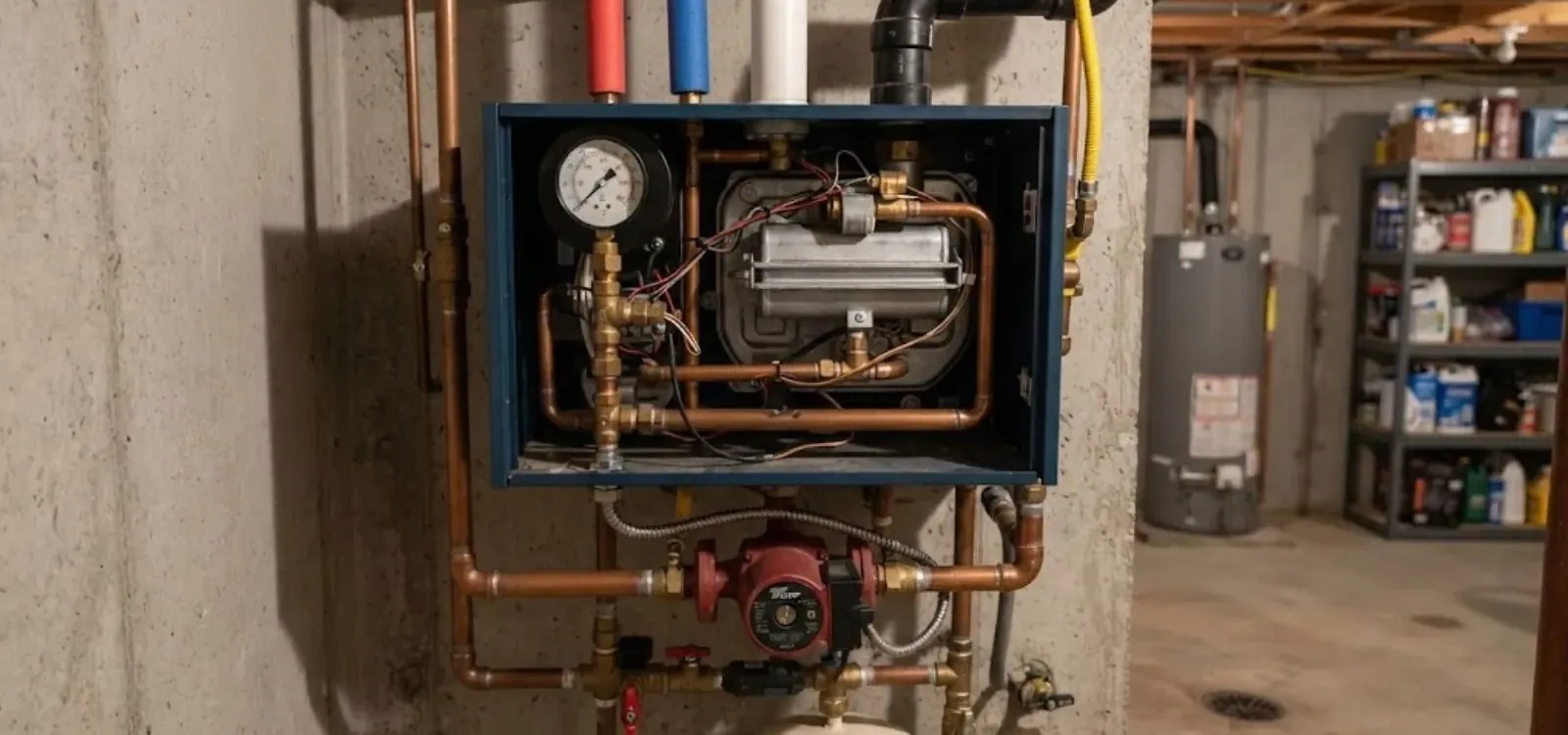
Boiler repair in Willoughby, OH splits into two halves. The water side, which covers pipes, valves, pumps, pressure and leaks, is plumbing. The fire side, which covers gas valve, burner, ignition, flue and combustion, is heating work that needs a licensed HVAC or boiler specialist. We take the first half and tell you when the second applies.
If you smell gas, leave the house at once and call your gas utility or 911 from outside. Do not flip switches, use the phone inside, or try to relight anything. A carbon monoxide alarm that sounds is a reason to get everyone out and call 911 too. Everything else on this page can wait for a calm phone call to (440) 468-0237, with our 24/7 line there if a leak turns urgent.
Hot water or steam, gas or oil: the answers that decide who comes
Most homes with a boiler use hot water pumped through baseboard or radiators. Older homes may have steam, which runs at low pressure and has its own quirks, such as a water level in the boiler that must be watched. The fuel is usually gas or oil, and the type of heat plus the fuel tells us how much of your problem is plumbing.
Hot water systems are the closest fit for a plumber, since much of the trouble is water pressure, air, leaks and pumps. Steam boilers are their own specialty, and an honest call may send you to a boiler technician. Oil burners need an oil burner technician. We tell you on the phone which category your system falls into rather than guessing on your doorstep.
Water-side problems we repair
These are the usual faults that sit on the plumbing side of a hot water boiler.
Leaks at fittings and valves
Weeping unions, zone valves, drain valves and radiator valves are common and fixable, often with new packing or a replacement valve.
Low or fluctuating pressure
A cold boiler should read the pressure listed in its manual. Constant drops mean a leak or a failing fill valve, and constant rises point to the expansion tank.
Failed expansion tank
The tank absorbs water growth as it heats. If its air charge is gone, pressure spikes and the relief valve may open.
Air in the system
Gurgling and cold radiators often mean trapped air. Bleeding and a working air separator or vents fix the pattern.
Circulator pump faults
A pump that hums, runs hot or fails to move water leaves the boiler hot and the radiators cold.
Boiler acting up but not an emergency?
Call and tell us what the gauge reads and what the pipes sound like, and we will say whether it is a plumbing visit.
Gas smell, soot, or a carbon monoxide alarm: leave first
If you smell gas, leave the building immediately and call your gas utility or 911 from outside. If a carbon monoxide alarm sounds, get everyone outside into fresh air and call 911. Soot around the boiler, a yellow or lazy flame, or a flue that looks loose also needs a heating specialist. We do not diagnose combustion by guesswork, and neither should you.
Symptom, likely area, and who should handle it
| What you notice | Likely area | Who handles it |
|---|---|---|
| Pressure gauge keeps dropping | Leak or failing fill valve | Plumber |
| Pressure climbs and the relief valve drips | Expansion tank or overfill | Plumber |
| Gurgling, ticking or cold radiators | Air, circulator or valves | Plumber |
| Boiler will not fire or keeps locking out | Ignition, gas valve or controls | Licensed HVAC or boiler specialist |
| Rust, white deposits or water at the base | Leaking section or heat exchanger | Specialist, and likely replacement |
| Smell of gas or CO alarm | Gas supply, burner or flue | Gas utility or 911, then a specialist |
Do not cap or plug a relief valve that is dripping. It is the safety device, and the cause is the next repair.
Why the pressure gauge matters
A hot water boiler is a closed loop. Water heats, expands, and has to go somewhere, which is the expansion tank's job. The gauge on the boiler shows the loop's pressure, and the manufacturer's manual lists the right range for your building. Reading it takes seconds and tells us a great deal.
When we visit, we check the gauge cold and hot, then test the expansion tank's air charge with a tire-style gauge after isolating it. We put a pipe thermometer on the supply and return lines to see whether the circulator moves heat. Constant make-up water from the auto-fill valve is a clue. The system may be leaking somewhere, and that is where leak detection with a pressure test helps.
Before the first freeze, and what a Lake Erie winter asks of a boiler
The Cleveland-area average first fall freeze is October 28, and the January mean temperature is 29.1 degrees. Lake County also sits in the lake-effect snow belt, with about 63.8 inches of snow a year. A boiler that limps through October can fail in the first deep cold.
That makes autumn the time to have the water side checked: gauge, expansion tank, vents, circulator and visible leaks. If the heat fails in a hard freeze, pipes in outside walls and the basement can freeze. Call us about a frozen or split line, and our burst pipe repair page explains that work. A heating specialist handles the burner.
Leaks, corrosion and the honest case for replacement
Not every boiler is worth repairing. A cast iron boiler leaking from a section, rust staining at the base, or a heat exchanger crack means the boiler itself is failing. A plumber can replace valves and pumps around it, but we do not rebuild a failed heat exchanger or patch a cracked section.
When replacement is the honest answer, the work is shared. The boiler, burner and flue are the heating specialist's job. The water-side piping, new expansion tank, valves and the connection to your water heater, if it runs off the boiler, are plumbing. If the gas piping must change, the City of Willoughby requires a separate gas piping permit from its Division of Building Inspection. Ask whoever quotes the job who pulls it.
What to ask before you hire for boiler work
Ask whether the company works on your type of boiler, and who handles the gas and flue side. Ohio's contractor licensing board covers plumbing, HVAC and hydronics trades under Revised Code Chapter 4740, so ask which license applies to the work you need. Commercial contractors need a state license, while residential contractors may not, though local building departments can set their own rules.
You can check any contractor's license through the Ohio Department of Commerce "Look Up a License" tool at elicense4.com.ohio.gov. If a dispute arises, the Ohio Attorney General consumer line is 1-800-282-0515. In Wickliffe, confirm with city hall and the county who issues residential plumbing permits before work starts, as noted on our Wickliffe page.
What drives the cost of boiler repair
Boiler repair prices vary because the systems vary. A valve swap on an accessible hot water loop is a small visit, while a buried leak in a heating loop is a different job.
System type
Hot water, steam and combination systems differ in parts, pressure and the checks required.
Age and parts
Older boilers may need parts that are scarce, and an obsolete circulator can mean replacing more than one component.
Access
Cramped mechanical rooms, insulated pipe and radiators behind finished walls add labor.
Diagnosis time
Intermittent pressure loss or air problems may need a pressure test and repeat checks.
Specialist involvement
If the burner, gas valve or flue needs work, a licensed heating technician is a second visit and a separate bill.
Insurance note. Homeowners insurance may cover sudden water damage from a burst heating pipe, but it usually does not cover a boiler that wears out or a slow leak, so call for your number and check your policy.
Code and standards behind boiler work
The water-side piping on a boiler follows the Ohio Plumbing Code, which is based on the International Plumbing Code (IPC). Gas supply work follows the National Fuel Gas Code, NFPA 54. A relief valve that discharges is never something to cap or plug.
Boiler questions from Willoughby homeowners
Leave the house immediately and call your gas utility or 911 from outside. Do not turn lights or appliances on or off, do not use a phone inside, and do not try to relight a pilot. Wait for the utility to clear the home before you go back in. Boiler repair can wait for later.
We handle the water side: leaks, valves, expansion tanks, circulators, air and pressure faults. Gas valves, burners, ignition and flues need a licensed HVAC or boiler specialist, and we will say so when the symptom points there. We would rather send you to the right trade than guess.
A slow drop usually means water is leaking out somewhere in the loop, or the fill valve is failing. Checking the gauge cold, finding any weeping fittings and testing the system under pressure usually settles it. An occasional drop after bleeding air is normal.
Usually because pressure or temperature in the loop is too high, often from a failed expansion tank or an overfilled system. The valve is a safety device, so never cap or plug it. Call us, since the cause is the repair.
Age alone is not the test. Leaks from the boiler body, heavy rust at the base or a cracked heat exchanger point to replacement, while a worn pump, valve or tank can be fixed on an older boiler. A visit and a gauge reading usually answer it.
Our line at (440) 468-0237 is open 24/7. Water leaking from a boiler or its pipes is something we can address, and we will advise on isolating it. A loss of heat on a cold night may need a heating specialist for the burner side, and we will tell you which applies.