
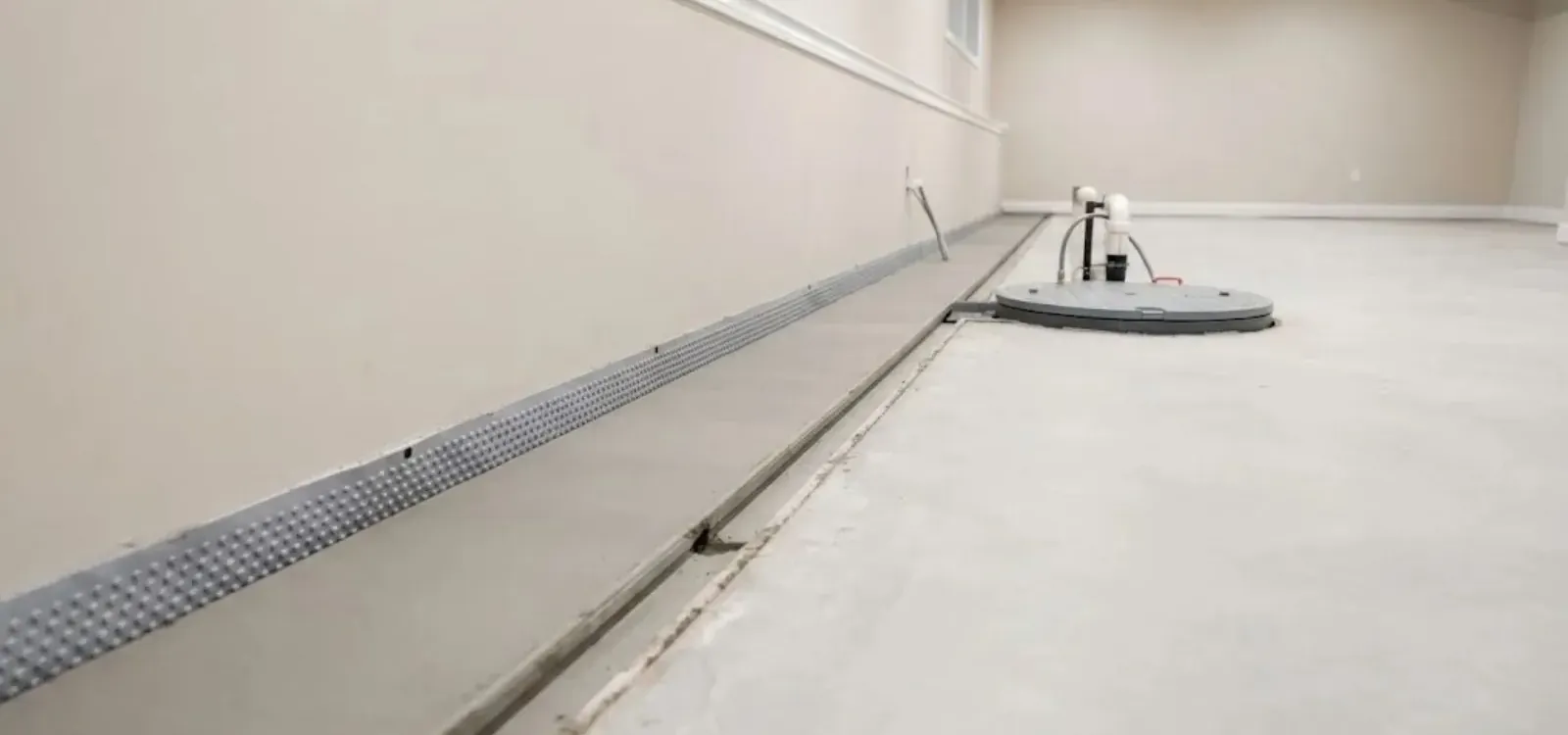
Basement waterproofing in Willoughby, OH covers several different jobs under one name, and only some of them belong to a plumber. Water can come from a leaking pipe, from groundwater pushing through the wall, from a downspout dumping at the foundation, or up through a floor drain from the sewer. Each has a different fix.
A plumber handles the water that plumbing causes or controls: supply leaks, floor drains, interior drainage that leads to a sump pump, and backwater valves. Wall repair, exterior membranes and foundation crack injection belong to a structural waterproofing or foundation contractor. We will tell you which is which before you spend money.
First question: where is the water coming from?
The pattern of wetness usually points to the source before anyone opens a wall.
Wet only after rain
Rain-linked water points to groundwater, a downspout dumping near the wall, or a window well that fills. Check where gutters discharge before anything else.
Wet in dry weather
Water that appears with no rain suggests a plumbing leak, a failing water heater or a leaking drain. A water meter test with all fixtures off tells you quickly, and leak detection finds the pipe if the meter moves.
Damp patches on cold surfaces
Moisture on cold walls and pipes in summer is often condensation from humid air, not a leak. A dehumidifier, not a drain, is the fix.
Water from a floor drain
Water or a sewage smell coming up through the floor drain is a sewer-side problem and calls for a sewer camera inspection and possibly a backwater valve.
Seepage at the wall-floor joint
Water creeping in where the floor meets the wall is classic groundwater pressure, which an interior drain can carry to a sump.
What a plumber does, and what we do not
We do the plumbing side of a wet basement. That means finding supply or drain leaks and cutting an interior channel along the footing that carries water to a sump basin. We install and repair the pump, trace downspouts and foundation drain connections, and fit a backwater valve in the building drain.
We do not do structural waterproofing. Exterior excavation, membrane work and foundation crack injection belong to a waterproofing or foundation contractor. So do wall bracing for bowed walls, regrading the yard and replacing window wells. If a crack in your wall is actively weeping, we say so and point you to the right trade rather than selling you an interior system that will not stop it.
Not sure where the water is coming from?
Call and describe when and where the basement gets wet, and we will tell you whether a plumber is the right first visit.
Who fixes which kind of wet basement
| What is happening | A plumber can | Another trade handles |
|---|---|---|
| Water seeps at the wall-floor joint | Install an interior drain channel to a sump basin and pump | Exterior membrane and drain tile excavation |
| A crack leaks in the foundation wall | Manage the water that gets in with a drain and pump | Crack injection and any structural repair |
| Downspouts empty beside the foundation | Trace buried downspout lines and fix broken ones | Regrading the yard and gutter work |
| Floor drain backs up in heavy rain | Camera the line, fit a backwater valve | City main repair, which the sewer division handles |
| Pipe, valve or heater leaks | Locate and repair it | Mold remediation and drywall |
| Walls bow inward or show horizontal cracks | Nothing structural | Structural engineer or foundation contractor |
A plumber cannot judge whether a bowing wall is safe, so a foundation specialist or engineer should look at it.
Why basements in this part of Lake County stay damp
Soils in the Chagrin River watershed are generally clayey glacial till that drains poorly, according to the Chagrin River Partnership's watershed plan. Water that soaks into clay lingers against the foundation, building pressure at the wall. That is why a basement can seep for days after a storm has passed.
About 71 percent of Willoughby lies inside the Chagrin watershed, so much of the city shares that soil. On April 1, 2026, Willoughby Hills reported flooded basements after the Chagrin rose above 14 feet. That is a different city, but it shows how fast water arrives on saturated ground. Lake Erie bluffs are glacial till capped with laminated clay and sand, per Ohio DNR, so shoreline lots likely face similar slow drainage.
Gutters, downspouts and the drain tile
Roof water is the easiest groundwater problem to fix. A downspout that ends at the foundation puts a few hundred gallons into the soil beside your wall during a storm. Extending it well away from the house costs little and often cuts basement moisture more than any interior system.
Buried downspout lines and foundation drains are plumbing, and they fail quietly. They crack, clog with roots or silt, or tie into the wrong place. Willoughby Sec. 915.04 bars tying downspouts, foundation drains and areaway drains into a building sewer connected to the public sanitary sewer. A plumber can camera a foundation drain where there is access. That finds an illegal connection before a rainstorm does.
Foundation drain tile cannot always be camera-checked. Some systems have no cleanout, and old tile may be crushed. We tell you what the camera can and cannot see, and when the next step is excavation, that is for another contractor.
Interior drains and sump systems
An interior drain system cuts a channel in the floor along the wall, lays perforated pipe in gravel, and sends collected water to a sump basin. The pump then moves it outside. It does not stop water from entering the wall. It gives the water an easy path so it does not come up through your floor.
That is the honest limit. If you want the wall itself kept dry, that is exterior work. If you want a dry floor, an interior system with a reliable sump pump and backup power is a reasonable answer. We will explain the trade-off. Concrete cutting is loud, dusty and messy, and the floor patch stays visible, so we recommend it only when the cause is groundwater pressure.
Backwater valves and sewer-side flooding
A backwater valve, also called a check valve, sits in the building drain and closes if sewage flows backward from the main. Installing one means cutting the slab to reach the pipe, setting the valve, and adding an access lid for cleaning. It protects the basement fixtures only if everything below it runs through the valve, and the flap needs regular cleaning to keep working.
If you live in Mentor, the city's Sanitary Sewer Backup Reduction Grant page lists backwater check valves, floor drain plugs, standpipes and overhead plumbing as eligible items. That page was last modified in 2016, so ask the city whether funding is open before you plan around it. Our Mentor service page explains who issues permits there.
When to call a structural waterproofing or foundation contractor
Call that trade first if you see horizontal cracks, stair-step cracks in block walls, walls bowing inward, or sheets of water entering through a wall. These signs point to soil pressure on the structure. Interior drains and pumps manage water, but they do not repair the wall. Ask the contractor what warranty they offer in writing.
How a diagnostic visit runs
Here is what happens when you call us about a wet basement.
- 1
Describe the pattern
We ask when it gets wet, where, how much, and what it smells like. Rain-linked and dry-weather water mean different problems.
- 2
Meter and fixture test
With every fixture off, we watch the water meter. A moving meter means a supply leak, and the job becomes leak detection.
- 3
Trace the roof water
We check where every downspout, sump discharge and foundation drain goes, and whether any tie into the sanitary line.
- 4
Camera the drains
We run a push camera through floor drains and accessible foundation drains to check for cracks, roots and silt.
- 5
Explain the findings
We tell you which fixes are plumbing, which are another trade, and what we recommend first. The decision stays yours.
What drives the cost of basement water work
A downspout extension and a full interior drain with a new pump sit at opposite ends. These are the factors that move the price.
Length of drain
The linear feet of floor you must cut and re-pour sets the labor, concrete and hauling.
Pump and backup
The pump, the basin and any backup power system are separate line items.
Floor and finish
Finished walls, flooring or tight access slow the work and increase patching.
Backwater valve depth
A valve deeper in the slab or in a finished room takes longer to reach.
Permits and discharge
Moving the discharge outside, correcting a sanitary tie-in or pulling a permit adds time.
Insurance note. Homeowners insurance generally does not cover groundwater seepage or gradual leaks, though sudden pipe breaks are often covered, so call for your number and check your policy for water backup coverage.
Basement water questions
Partly. We handle interior drains, sump pumps, downspout and drain tracing, floor drains and backwater valves. Exterior excavation, foundation crack injection and wall repair belong to a waterproofing or foundation contractor. We tell you which category your problem falls into, even when it means sending you elsewhere.
No. It collects water that has already entered and carries it to a sump pump, so the floor stays dry. The wall can still be damp. If you need the wall kept dry, that is exterior waterproofing, which we do not perform.
Turn off all water and check the meter. If it keeps moving, you have a plumbing leak. If the meter is still and the water appears after rain, groundwater is the likely source. Condensation on cold pipes in summer is another look-alike, and we can sort them out on the visit.
No. Willoughby Sec. 915.04 prohibits connecting roof downspouts, sump pumps, foundation drains and areaway drains to a building sewer that connects to the public sanitary sewer. Stormwater goes to a storm sewer or an approved outlet, so extend them above ground instead.
Consider one if your floor drain has backed up during heavy rain and the camera shows your lateral is intact. A valve protects against sewer water flowing back into your house, but it needs periodic cleaning and does not help if the problem is groundwater.
Yes. Our line at (440) 468-0237 runs 24/7. An active flood is usually a pump or sewer problem, and our sump pump page covers that case. For planned waterproofing questions, call during the day so we can talk through your options at a calm pace.