
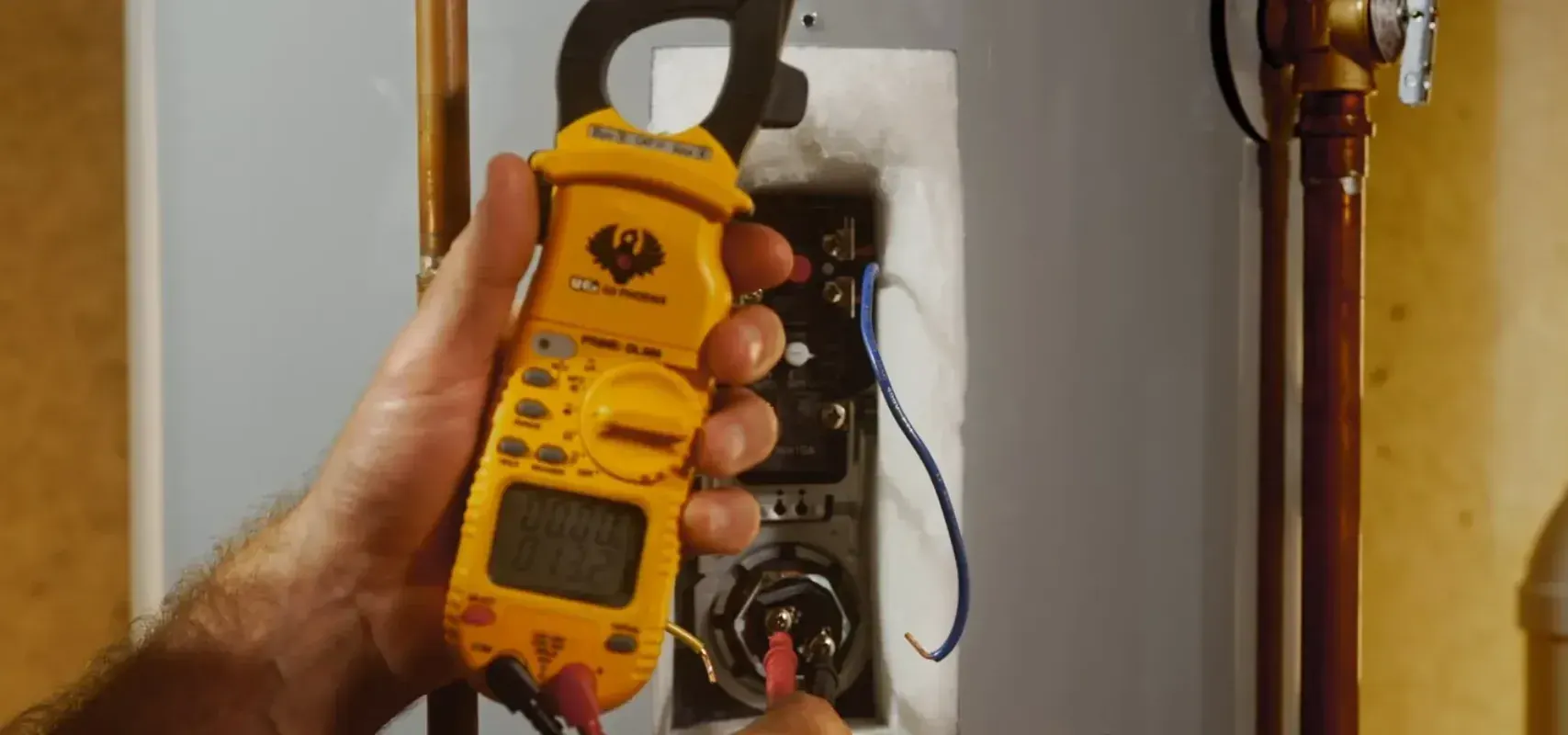
The relief valve on your water heater opens when pressure or temperature inside the tank climbs too high. If it drips in your Willoughby, OH home, the cause is often thermal expansion, high street pressure or a worn valve seat. Never cap, plug or tighten it shut.
A steady drip, a hot discharge pipe or a hissing sound means the tank is protecting itself. Turn the thermostat down, keep people clear of the discharge pipe, and call a licensed plumber to find the cause.
What the valve is built to do
A tank water heater holds heated water inside a closed steel shell. The temperature and pressure relief valve, usually called the T&P valve, is a spring-loaded safety device screwed into the side or top of the tank.
If pressure rises past the valve's rating, or if the water gets dangerously hot, the spring lifts and water exits through the discharge pipe. That bleed-off keeps the tank from rupturing. Without it, a stuck thermostat or a dead gas control could turn a tank into a hazard.
The one rule that matters most
Never cap, plug, tighten down or restrict a relief valve or its discharge pipe. Manufacturer manuals say so directly. The State Water Heaters expansion tank manual warns not to plug the valve opening, because doing so can cause property damage, serious injury or death.
A dripping valve is information. Treating the symptom by blocking it removes the only thing standing between a fault and a failure.
Hot water at the valve?
Keep clear of the pipe and call (440) 468-0237. Our line is open 24/7 for heater problems.
Five common reasons a valve drips
Each cause has a different fix, which is why guessing and swapping the valve rarely works.
Thermal expansion
Heating water makes it expand. If a backflow preventer or pressure reducing valve keeps that water from backing into the street main, pressure spikes on every heating cycle and the valve drips.
High house pressure
Street pressure above about 80 psi strains every fixture and valve. A State Water Heaters manual recommends 60 psi or less and calls for a pressure reducing valve above 80 psi.
A worn or scaled seat
Minerals and age can keep the valve from sealing. A lime crust on the outlet is a sign the valve has already been discharging.
Overheating
A failed thermostat, stuck element or bad gas control can push the tank past its limit. Hot water coming from the pipe is a more urgent sign than a slow drip.
A failed expansion tank
If an expansion tank exists but has lost its air charge or its diaphragm, it no longer absorbs the extra volume and the relief valve takes over.
Reading the drip
What you see tells you where to look first. This is a way to describe the problem on the phone, not a replacement for a plumber's gauge reading.
| What you see | Most likely cause | Next step |
|---|---|---|
| Drips only when the heater runs | Thermal expansion in a closed system | Have a plumber check for a backflow device and test the expansion tank |
| Drips all the time, water is cold | Worn valve seat or scale | Plumber replaces the valve with the right rating |
| Drips and house pressure feels strong | High incoming pressure | Gauge test and pressure reducing valve check |
| Pipe runs hot or steams | Overheating tank | Turn the thermostat down, shut off the fuel, call right away |
| Tank leaks at the base | Tank failure, not the valve | Shut off water and power, call about replacement |
| Valve drips after you lifted the lever | Debris on the seat | Do not repeat. Call a plumber to inspect it |
A hot discharge pipe is a safety issue. Keep people and pets clear until a plumber has looked at it.
Testing the valve, and when not to
Manufacturers do ask owners to operate the T&P valve by hand about once a year. State Water Heaters says to lift the lever and check that the valve seats and works freely.
That is the limit of what to do yourself. Stand clear of the discharge pipe, because the water may be extremely hot, and make sure the pipe leads to a place where scalding will not hurt anyone or soak anything.
If the valve does not reseat, keeps dripping afterward, or you are not sure how to test your model, stop. An older valve that sticks can leave you with a constant leak, and the fix is a plumber replacing it with a correctly rated part.
Why not just replace the valve?
A new valve can fix a worn seat, but it will not fix expansion or pressure. If the real cause is a closed system, a fresh valve will start dripping again within weeks. That is why water heater repair starts with a pressure reading, not a part swap.
The discharge pipe matters as much as the valve
The pipe attached to the valve carries hot water to a safe spot. Rinnai's manual says no other valve or shut-off device may sit between the relief valve and the heater, and the discharge line must be suitable for water at least 180 degrees Fahrenheit.
The right material, length and end point depend on your heater's manual and your inspector. A cap, a plug, a shutoff or a reduced pipe size all change how the valve behaves. Do not modify the pipe yourself.
Who to call about water pressure in Willoughby and Mentor
Willoughby, Willoughby Hills, Willowick, Wickliffe and Eastlake buy drinking water from the Lake County Department of Utilities West Sub-District, treated at the Aquarius Water Treatment Facility in Willoughby. If pressure at the street seems high, the utility lab and superintendent line is 440-918-3420.
Homeowners in Eastlake share that supplier, while Mentor is different. Its water comes from Aqua Ohio, so a Mentor homeowner with a pressure question calls Aqua Ohio, not the county. The manuals above tell owners to contact the water supplier or the local plumbing inspector about thermal expansion, so know which supplier serves your address before you call.
Source: Lake County Utilities 2025 Consumer Confidence Report, West Sub-District, and Rinnai N Series installation manual
What a plumber checks, in order
A tech starts with a pressure gauge on a hose bib or the heater's drain to read static pressure, then watches whether pressure climbs when the heater fires. That one test separates street pressure problems from expansion problems.
Next comes the expansion tank, if there is one. The tech checks its air charge with a tire gauge on the valve stem, with the tank isolated and drained. A State Water Heaters tank is precharged to 40 psi and the charge needs to match the incoming pressure. After that comes a look at the valve itself, the thermostat and the venting.
Where a water heater replacement makes more sense, the tech will say so. Tanks that leak at the seams cannot be fixed with a new relief valve, and old units with heavy scale often fail the next test.
The standard behind the relief valve
The valve itself is built to ANSI Z21.22, and its discharge pipe must follow the Ohio Plumbing Code, which is based on the International Plumbing Code (IPC). Do not plug, cap or thread the outlet, and do not run the pipe uphill. A valve that keeps weeping should be tested and likely replaced.
Relief valve questions
A slow drip of cool water is urgent but not a crisis. Hot water, steam, a hissing sound or a pipe too hot to touch is more serious. Turn the thermostat down, keep clear, shut off the fuel if you can reach it safely, and call a licensed plumber promptly.
No. Capping the pipe or plugging the valve outlet removes the safety relief and can cause property damage, serious injury or death. The drip means pressure or heat is too high, and the cause has to be found and fixed instead of hidden.
Manufacturers like State Water Heaters say to operate it by hand at least once a year. Follow your model's manual, stand clear of the pipe because the water can be extremely hot, and stop if the valve will not reseat. A plumber can test it during a maintenance visit.
Many homes see a drip when the heater recovers from a long idle, which points to thermal expansion. Ask a plumber to check for a backflow preventer and read your pressure with a gauge. An expansion tank sized to your pressure often resolves this pattern, though the valve itself should be checked too.
Mentor water comes from Aqua Ohio, not Lake County Utilities. Contact Aqua Ohio about street pressure, and ask the City of Mentor building division about permit rules. Your plumber can read pressure inside the house to tell you which side to question.
Still have a question?
Call the 24/7 line and a person answers.