
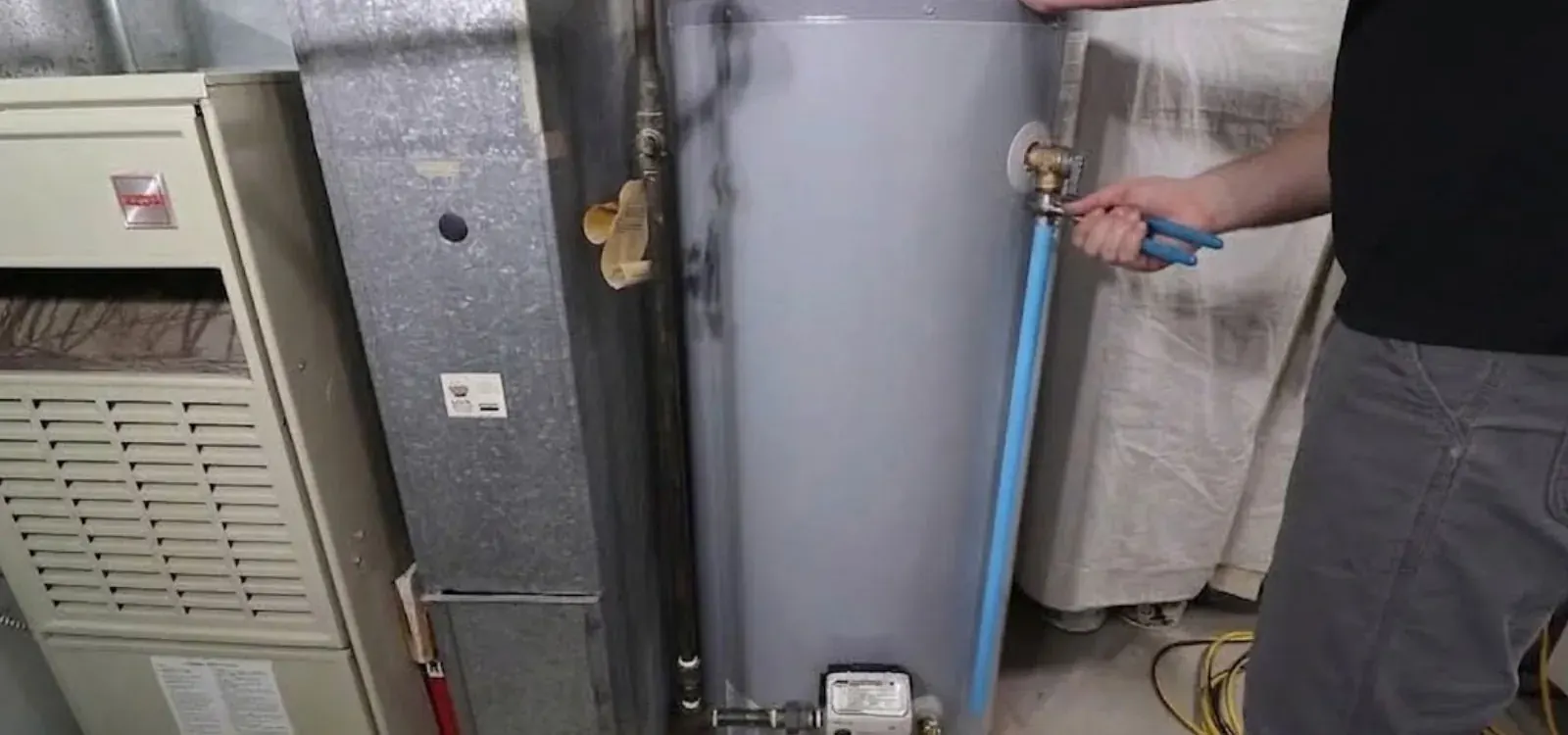
Maybe, but the answer depends on your fuel, your address and your skill with a torch and a pipe wrench. In Willoughby, OH, the building department that covers your home decides whether a permit is needed before you buy a tank, so make that call first.
A like-for-like electric swap is the easiest version. Gas, power-vented and tankless swaps are not beginner jobs, because a mistake in gas piping, venting or relief valve discharge can hurt people. If any step below makes you unsure, stop and call a licensed plumber.
Start with the phone call, not the store
Before you price a heater, find out who issues plumbing permits for your street. The City of Willoughby handles its own permits through the Division of Building Inspection at City Hall, 440-951-2800. Willoughby also issues a separate gas piping permit, so a gas heater can involve two applications.
Homes in Willoughby Hills and Willowick fall under the Lake County Building Department instead, and Eastlake has its own building department. Ask them three things: is a permit required for a water heater replacement, who may pull it, and when the inspection happens.
Do not assume the answer from a neighbor. Rules differ by town, and a swap done without a needed permit can surface later when you sell the house or file an insurance claim.
What a homeowner can handle and what to hand off
Use this as a sorting tool, not a permission slip. Your building department has the final say on who may do what at your address.
| Task | Realistic for a careful DIYer? | Why it matters |
|---|---|---|
| Draining and flushing the old tank | Yes | Hot water and a heavy tank. Shut off power or gas first, and use a hose to a floor drain. |
| Swapping an electric element or thermostat | Often yes | Needs the breaker off and a meter check. Live wiring is not a place to guess. |
| Setting a new electric tank and reconnecting water lines | Possible | Needs leak free joints, a proper drain pan, and relief valve piping that is correct. |
| Gas line, gas valve and flex connector | No, call a plumber | A bad joint leaks gas. Willoughby requires a separate gas piping permit. |
| Venting a gas or power vent heater | No, call a plumber | Wrong slope, size or joints can push carbon monoxide into the house. |
| Relief valve discharge pipe | Only if you know the rules | The pipe must be sized and routed correctly and never capped or reduced. |
| Expansion tank on a closed system | Depends | Needs the right size and an air charge matched to your water pressure. |
| Large or high-input heaters | No | Heaters above 200,000 BTU/h, 210 degrees F or 120 gallons fall under Ohio boiler rules. |
If your heater is gas and your plan involves touching any gas fitting, the answer is a plumber.
Not sure it is a safe DIY?
Call (440) 468-0237 and describe your heater. We will tell you plainly whether it is worth doing yourself.
Five places a swap goes wrong
These are the mistakes a technician sees most often when a first-time swap needs rescuing.
Gas connection
A gas joint can look tight and still weep. Leak testing is done with a gauge or a bubble solution, and a gas smell means leave the building and call the gas utility or 911 first.
Venting
A gas heater must carry exhaust out of the house. A vent that sags, is undersized or is joined with the wrong parts can spill exhaust into the room.
Relief valve discharge
The valve needs a full size discharge pipe that ends in a safe spot. Shortening it, threading a cap on it or running it uphill defeats its purpose.
Thermal expansion
If your house has a backflow preventer or a pressure reducing valve with no bypass, heated water has nowhere to go. The relief valve then drips, and the fix is an expansion tank.
Water supply damage
Over-tightened fittings, a mix of copper and steel without the right connector, and dry-fire on an electric tank each cause costly repeat visits.
Why the relief valve and expansion tank decide the job
A tank water heater is a pressure vessel. The temperature and pressure relief valve is the last safety device between a malfunction and a rupture, so its piping is the one detail you must not improvise.
Manufacturer manuals are blunt about it. Rinnai's manual for its condensing tankless units says to put no other valve or shut-off device between the relief valve and the heater, and not to plug or restrict it. A water heater is not a place for creative plumbing.
Expansion is the second trap. Heating water makes it expand, and a closed system has no place to send it. A thermal expansion tank is built for that job. A State Water Heaters owner's manual for these tanks says a sealed system needs one or the relief valve will discharge on every heating cycle.
The gas question
Gas work is where most reputable plumbers draw the line for homeowners, and it is the main reason professional water heater installation exists. A new heater often needs a fresh flex connector, a sediment trap and a leak test, and the gas shutoff has to be reachable.
Leave the gas side to a plumber even if you are comfortable with the water side. You can still save time by clearing the area, shutting off water at the heater's cold inlet, and having the old tank drained before the appointment.
If you ever smell gas
Do not flip switches or look for the source. Leave the house, then call the gas utility or 911 from outside. Do not go back in to finish a repair.
What Willoughby and Lake County paperwork says
The City of Willoughby issues plumbing permits through its Division of Building Inspection and publishes a separate gas piping permit application. Its residential plumbing application was posted with a 2020 form date, so check the current fee schedule before you plan a budget.
Willoughby also registers plumbing contractors, and its registration requires a copy of the state license, a surety bond and liability insurance. When you hire out the job, ask the plumber whether they are registered with the city and who pulls the permit.
For Lake County Building Department communities such as Willoughby Hills and Willowick, the county's 2026 residential schedule lists a water heater only line, and it lists expansion tanks and backflow devices as permit items as well. The Ohio Plumbing Code follows the 2021 International Plumbing Code as amended by Ohio.
Its October 2025 amendments allow plastic drain pans under gas fired heaters that meet flame spread limits. Your inspector confirms which pan suits your install.
Source: City of Willoughby Division of Building Inspection permit forms, Lake County Building Department 2026 residential plumbing permit schedule, and Ohio Board of Building Standards October 2025 OPC amendments
Doing it right if you go ahead anyway
If your building department allows it and your heater is a simple electric swap, plan the day carefully, or book a water heater replacement and watch how it is done. Match the tank size, fuel and existing hookups, and check the old heater's label for its capacity and electrical rating.
Turn the breaker off and confirm with a tester, shut the cold inlet, and drain the tank to a floor drain through a hose. Then install the new tank on a drain pan, connect water lines with proper fittings, and fill it completely before you restore power. Skipping that last step burns out the elements.
Do not do these, even to save a trip
Do not cap, plug or shorten the relief valve discharge pipe. Do not raise the thermostat to make hot water last longer. Do not bypass a venting problem by cutting a hole or taping a joint, and do not connect gas fittings you cannot leak test.
A plumber can inspect your venting and discharge piping after the swap even if you did the water connections yourself, which helps catch the mistakes you cannot see.
Questions about replacing your own heater
The City of Willoughby issues plumbing permits and a separate gas piping permit, but the exact trigger for a like-for-like swap is the building department's call. Phone the Division of Building Inspection at 440-951-2800 before you buy, and ask who is allowed to pull the permit and when the inspection happens.
A tank is simple to thread on, but the size and air charge have to match your water pressure, and the tank must be supported. If your house has a backflow preventer, the Lake County Building Department lists expansion tanks as permit items, so ask your inspector first.
For most homeowners, no. Gas fittings, flue sizing and combustion air all need correct work and a leak test. A small mistake can leak gas or send carbon monoxide into living space. Call a licensed plumber for any gas heater, even if you handle the plumbing side.
People reduce or cap it, or terminate it where it could spray on someone. The discharge opening must never be blocked or made smaller, and hot water can scald. Leave the routing to someone who works from the Ohio Plumbing Code and the local permit rules.
The county issues plumbing permits for many communities, including Willoughby Hills and Willowick, but not the City of Willoughby. Eastlake has its own building department, so confirm who covers your address with the right office before you start, and ask about gas piping if your heater burns gas.
Still have a question?
Call the 24/7 line and a person answers.