
If you live in Willoughby, OH and want a kitchen sink water filter, start with an under-sink carbon block unit that carries NSF/ANSI 42 and 53 certification and has its own small faucet. That combination cuts chlorine taste and smell, and the 53 rating covers lead. Reverse osmosis is the next step up, and it only makes sense if you want fewer dissolved minerals or less fluoride.
Willoughby tap water comes from Lake Erie through the Lake County West Sub-District, so you are not starting with a bad supply. You are choosing how much polishing you want at one tap. The sections below match the filter type to the complaint, then cover what your cabinet needs before anyone drills a hole.
Pick by the complaint, not the brand
Most buying mistakes start with a filter that solves a different problem than the one in your kitchen.
Water tastes or smells like a pool
This is the disinfectant. A carbon block cartridge handles it well, and the cost and upkeep stay low.
You worry about lead
Look for a filter certified to NSF/ANSI 53 for lead. Also check whether your home or service line has lead pipe at all, which the county map in the next section can answer.
White scale on kettles and faucets
A kitchen filter will not fix this. Scale comes from dissolved minerals, and only a softener, or in some cases reverse osmosis at one tap, reduces them.
You want the lowest dissolved solids
Reverse osmosis membranes do this at a single faucet. They also waste some water to the drain and need a storage tank under the sink.
What Lake County reports about Willoughby tap water
The Lake County Department of Utilities 2025 Consumer Confidence Report for the West Sub-District lists total chlorine at 1.36 ppm, with a range of 1.21 to 1.50. Fluoride was 1.07 ppm, and the highest turbidity reading was 0.13 NTU. For you, that means chlorine is the main taste factor, and a carbon filter is aimed at exactly that.
On lead, the 90th percentile was below 2.0 ppb, and none of 30 sampled homes went over the 15 ppb action level. Copper was 0.078 ppm, also with none over the limit. Those are samples from the utility's system, so your own pipes still matter. Lake County Utilities publishes a lead service line inventory map you can search by address.
Lake County's report does not list a hardness figure, so call the utility lab at 440-918-3420 or test your own tap. Cleveland Water, which also treats Lake Erie water, reports about 6.6 grains per gallon (113 ppm), which is a neighboring utility's number, not a Willoughby reading. Treat it only as a rough idea of why scale shows up on fixtures.
Source: Lake County Utilities 2025 Consumer Confidence Report (West Sub-District) and City of Cleveland Water 2021 water quality report
Not sure which filter fits your sink?
Call and describe the cabinet and the complaint, and we will talk through the options.
Four filter types compared for a Willoughby kitchen
| Filter type | Best for | Trade-off | What the install needs |
|---|---|---|---|
| Faucet-mount or pitcher | Renters and a quick start | Small capacity, frequent cartridge swaps | Nothing permanent |
| Under-sink carbon block with its own faucet | Chlorine taste, smell and certified lead reduction | Uses cabinet space and an extra faucet hole | Cold water tee, a mounting spot, one faucet hole |
| Under-sink reverse osmosis | Lowest dissolved solids and less fluoride | Wastes water to the drain, slower fill, tank takes room | Cold water tee, drain connection, faucet hole, space for a tank |
| Whole-house sediment and carbon | Filtering every tap and the shower | Larger purchase, needs a bypass and shutoff layout | Cuts into the main line, so it is a plumbing project |
A softener solves hardness at every tap, and none of these four types is a softener.
Reading the certification on the box
Filter marketing is loud, but the standards are short. NSF/ANSI 42 covers aesthetic effects such as chlorine taste and odor. NSF/ANSI 53 covers health effects, including lead reduction. NSF/ANSI 58 is the reverse osmosis standard.
A box that says it reduces contaminants without naming a standard tells you very little. Open the manufacturer's data sheet and look for the exact contaminant and the tested flow rate. Check how many gallons the cartridge is rated for, because a cartridge past its rating stops doing its job while the water still looks clear.
Check your sink before you buy anything
Ten minutes in the cabinet saves a return trip to the store.
- 1
Measure the open cabinet space
Reverse osmosis units with a tank need roughly the footprint of a small bucket. Carbon block systems are slimmer but still need a wall or floor spot.
- 2
Find the cold supply shutoff
The little oval valve under the sink should turn easily. A stuck or weeping valve is worth replacing before a filter tee goes on top of it.
- 3
Count the holes in the sink deck
A separate filter faucet needs one. Many sinks have a spare hole for a sprayer or soap dispenser. Stainless and granite decks without one are harder to drill.
- 4
Look at the drain line
Reverse osmosis sends reject water into the sink drain through a saddle clamp. If the drain is slow or the garbage disposal sits in the way, plan for that connection.
Where a plumber earns the visit
Plenty of people install a carbon filter themselves, and a basic cold-line tee is not complicated. The trouble starts with old compression fittings that leak when disturbed, or a shutoff that will not close all the way. A plumber carries the replacement valves and fittings to fix that on the spot.
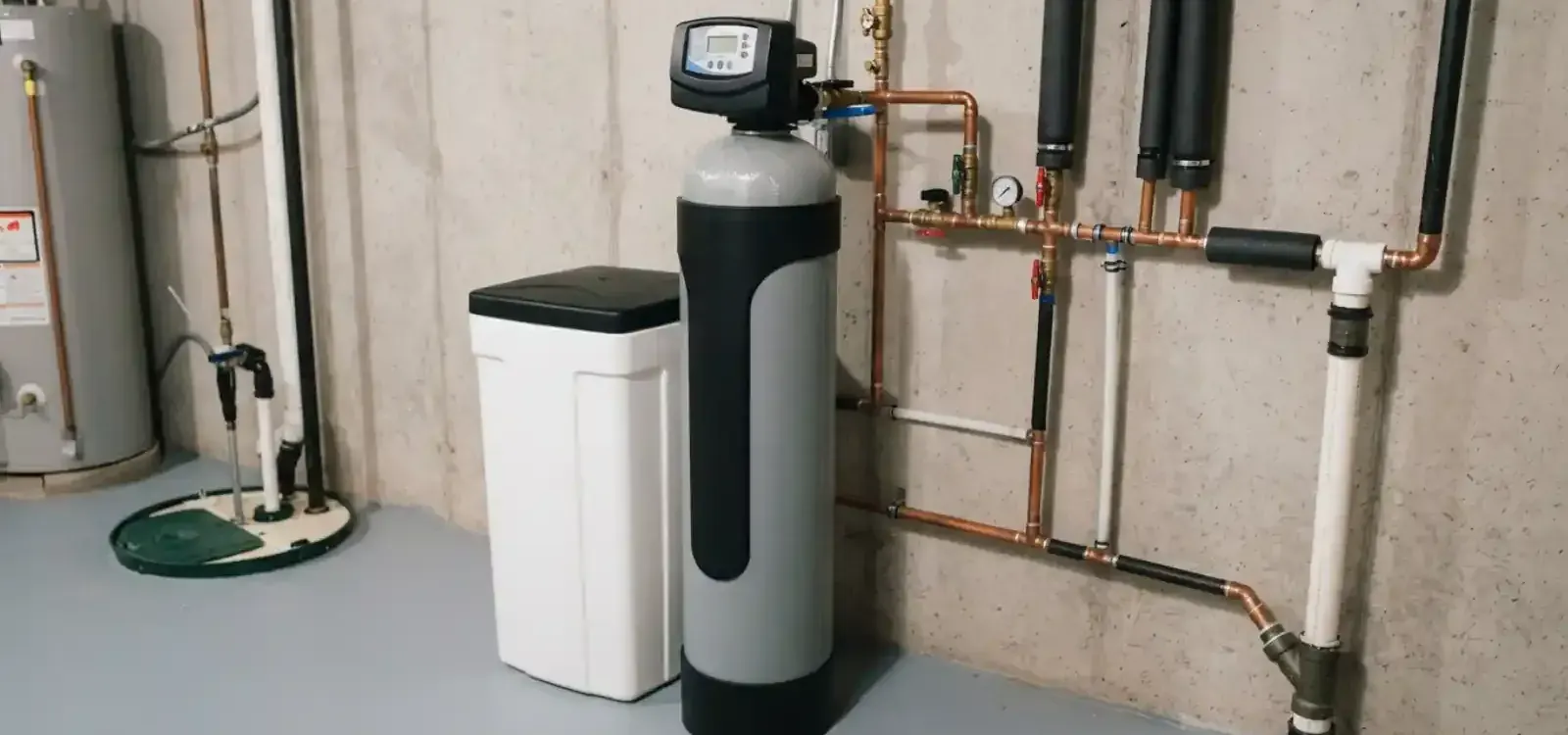
Whole-house filters and softeners are a different level of work. They cut into the main water line, need a bypass, and often need a drain and a power outlet nearby. That is the job described on our water softener and filtration page.
When the faucet is the real problem
A filter will not fix low flow caused by a clogged aerator or a worn cartridge. It will not stop a drip either. If the kitchen faucet itself is failing, faucet and sink repair comes first, because a new filter faucet just adds another fitting that can leak.
Lake County's West system serves Willoughby, Eastlake, Willowick, Wickliffe and Willoughby Hills. Mentor is different, since it gets Aqua Ohio water, so ask what your own utility publishes before you rely on any of the figures above.
Neighbors with the same water, and one with different water
Homes in Wickliffe draw from the same Lake County West system as Willoughby, so the 2025 report figures apply there as well. The median Wickliffe home was built in 1957, so check the shutoff valve under the sink for age before you add a filter tee.
Across town, Mentor is served by Aqua Ohio from its own Lake Erie system. If you have moved from Mentor, do not assume the same numbers. Look up the report for the utility that bills you.
Kitchen water filter questions in Willoughby
Not for safety reasons, going by the 2025 Lake County report. Lead, copper and turbidity were well inside the limits. People install filters mostly for taste, to reduce chlorine, or for extra lead protection in an older home. If you drink the tap water happily, you can skip it.
Standard carbon block filters generally do not remove fluoride, so the 1.07 ppm in the 2025 report passes through. Reverse osmosis membranes reduce it. If keeping or removing fluoride matters to you, check the manufacturer's data sheet for the exact claim before buying.
Follow the gallon or month rating on the box, whichever comes first. A cartridge that is past due stops filtering well, and a neglected one can hold bacteria in a warm cabinet. Write the install date on the cartridge, and set a phone reminder.
No. Scale is dissolved minerals, and a carbon filter does not reduce them. Reverse osmosis helps only at the one faucet it feeds. A water softener treats the whole house. Call us and we can talk through which fits your situation.
Lake County Utilities publishes a lead service line inventory map you can search by address. The county water lab at 440-918-3420 can also answer questions. If the map shows lead or unknown, ask about a filter certified to NSF/ANSI 53 for lead and about replacing the line.
Yes, and doing both in one visit makes sense. We check the shutoffs and the existing faucet first, so you do not end up with a new filter on a failing fixture. Tell us the sink material and the cabinet layout when you call (440) 468-0237, and we will say what the visit would involve.
Still have a question?
Call the 24/7 line and a person answers.