
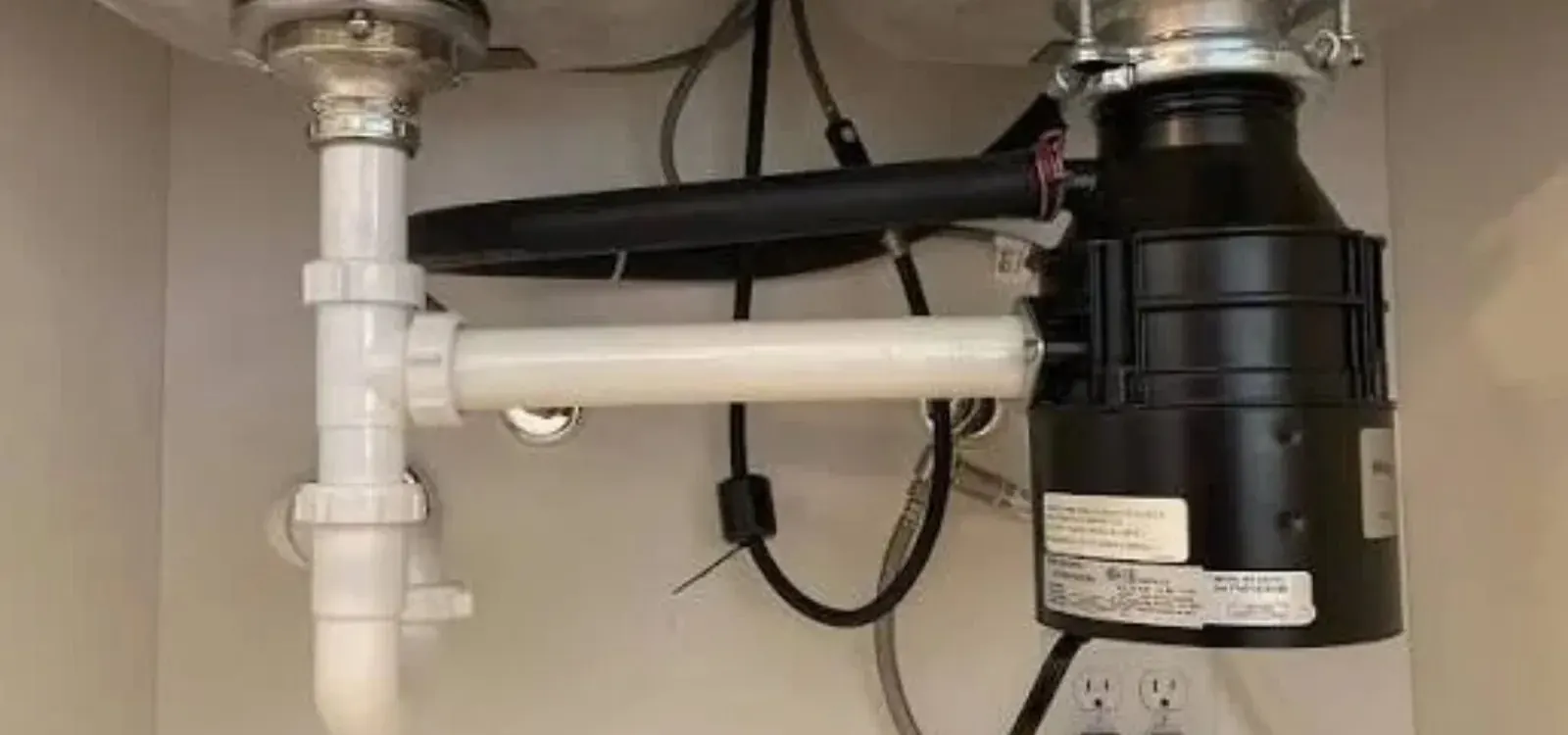
Installing a garbage disposal in a Willoughby, OH kitchen means mounting the unit under the sink flange, connecting it to power, tying it into the drain trap, and connecting the dishwasher hose if you have one. A direct swap of an existing unit is a manageable job for a careful homeowner. A first-time install adds wiring and drain changes, and that is where most people should call.
The two steps that cause the most trouble are the dishwasher knockout plug and the electrical supply. Forget to remove the plug and the dishwasher cannot drain. Guess at the wiring and you risk a shock or a fire. Both are covered below.
Swap or first install: the question that sets the scope
If a disposal is already under your sink, the sink flange, the outlet and the drain connection exist. A swap usually means removing the old unit, reusing or replacing the mounting assembly, and attaching the new one. That is the simpler job.
If your sink has only a basket strainer, you are adding a disposal where none existed. That means a different sink flange, a possible change to the trap arrangement, and a power source that may not be there. Many of the calls plumbers get are people who bought a unit, then discovered it does not fit the layout.
Measure the space under the sink before you buy. A disposal with a larger motor is taller and wider, and a deep cabinet shelf or a plumbing line can leave no room.
What the installation involves, in order
The sequence matters because each step depends on the last.
- 1
Cut power and clear the cabinet
Turn off the breaker for the disposal circuit and confirm the outlet or wires are dead with a tester. Empty the cabinet and place a bucket under the trap.
- 2
Remove the old unit or the strainer
A disposal hangs from a mounting ring that twists off. A strainer basket is held by a nut or putty seal. Old plumber's putty and corroded fittings often fight back.
- 3
Seat the new flange
The sink flange sets in plumber's putty or a gasket, then locks to the mounting ring from below. A tight, even seal matters here because this joint leaks into the cabinet if rushed.
- 4
Open the dishwasher knockout
If a dishwasher drains to the disposal, a plug inside the dishwasher inlet must be punched out before the hose connects. Remove the knocked-out piece from the chamber.
- 5
Hang the unit and connect the drain
Lift the disposal onto the mounting ring, align the discharge with the trap, and tighten the clamp. Check the slope of the drain so water does not pool.
- 6
Connect power and test
Wire to the supply as the manual describes or plug in a cord kit, then run water and check for leaks. Watch the joints for a few minutes, then again after an hour.
Planning a disposal install?
Call (440) 468-0237 and tell us what is under your sink now.
The dishwasher knockout plug
Many disposals ship with a small plastic or metal plug blocking the dishwasher inlet. It must be removed on any install where the dishwasher drains to the disposal. If it stays in place, dishwasher water has nowhere to go and backs into the machine or leaks from the dishwasher door.
If the plug falls into the grinding chamber, fish it out before the first run. A loose plug can jam the unit. If you are not connecting a dishwasher at all, leave the plug in place.
Install choices and what each one means
| Decision | Option | Best for | Trade-off |
|---|---|---|---|
| Mounting | Direct swap of same style | Replacing an existing disposal | Limited by the old flange and the space |
| Mounting | New flange and sink fit | Adding a disposal to a plain sink | Needs sink compatibility and more work |
| Power | Plug-in cord kit | Outlet already under the sink | Needs a switched outlet and the right cord |
| Power | Hardwired supply | Existing wired disposal circuit | Electrical work, best left to an electrician |
| Dishwasher drain | High loop | Many manufacturer-approved setups | Must follow the dishwasher manual |
| Dishwasher drain | Air gap | Where local code or the plan calls for it | Adds a fixture on the countertop |
Check the dishwasher and disposal manuals, then ask your plumber which drain setup local rules expect.
Electrical: where this stops being plumbing
A disposal needs power, usually a switch that controls the unit and a circuit that can handle the motor. A plug-in cord kit uses an outlet under the sink that is switched on the wall. A hardwired unit connects directly to the circuit.
Do not run an extension cord, and do not share a circuit that is already crowded with a dishwasher and other appliances. If there is no outlet or switch for the disposal, a licensed electrician needs to add one. A plumber can coordinate, but wiring is not plumbing work.
Always cut power at the breaker, not just the wall switch. Test the wires or outlet before you touch anything, and keep water away from open connections.
Air gap, high loop and the dishwasher connection
A dishwasher dumps dirty water, so its drain hose must not allow that water to flow back into the machine. Some homes use a high loop, which lifts the hose to the top of the cabinet. Others use an air gap fitting, a small cylinder on the countertop that creates a physical break.
Which one is required depends on the dishwasher maker's instructions and the local plumbing rules. Ohio follows the Ohio Plumbing Code, based on the 2021 International Plumbing Code with Ohio amendments, and the plumber follows that code and the local permit rules.
Whichever arrangement is used, the hose connects to the disposal's dishwasher inlet, after the knockout is clear. A kinked or low hose is a common cause of a dishwasher that leaves standing water.
Permits and inspectors around Willoughby
Plumbing permits inside the City of Willoughby come from the city's Division of Building Inspection at One Public Square, and the city lists a Plumbing Permit form and an online permit portal on its building permits page. The page does not say whether a disposal swap needs a permit, so ask City Hall at 440-951-2800 before you start.
Lake County Building Department issues plumbing permits for several nearby communities, including Willoughby Hills and Willowick, but not the City of Willoughby. Its permit counter is in Painesville at 440-350-2636. In practice, the first call decides who handles your project, so check the address before you plan the job.
Source: City of Willoughby Building Department permits page, Lake County Building Department plumbing permit schedule
When to call a plumber instead
Call if you are adding a disposal where none existed, if the drain under the sink is old or corroded, or if you are unsure about the electrical supply. A trap that does not line up, a sink with a crack, or a cabinet that floods when you test all point to stopping.
A plumber also helps when the sink drains slowly even before the disposal. If a kitchen line is already clogging, adding a grinder pushes more food into a pipe that cannot carry it, and drain cleaning comes first.
While the cabinet is open, a plumber can also replace worn supply lines or a leaking faucet connection, so ask about faucet repair at the same visit. Cost depends on the type of unit, existing connections, electrical needs and the sink itself, so call for your number.
Installing in nearby towns
In Willowick, permits for plumbing work go through the Lake County Building Department rather than the city of Willoughby, so the paperwork route differs from a Willoughby address. A plumber who works in several towns knows which door to knock on.
In Mentor, the City of Mentor building division handles building inspection. Mentor homes are on Aqua Ohio water rather than Lake County Utilities, which has no effect on a disposal, but it does mean different billing and contacts if a water question comes up.
Code points for a disposal swap
A new disposal still has to meet the Ohio Plumbing Code, which is based on the International Plumbing Code (IPC), for the trap, the drain connection and the dishwasher air gap or high loop. Check that the electrical connection is on a protected circuit or a listed cord, as the National Electrical Code (NEC) requires.
Garbage disposal installation questions
A like-for-like swap is doable for a careful homeowner who can turn off power, read the manual and handle plumbing fittings. A first install, new wiring or a corroded drain is a job for a plumber, with an electrician for the circuit. Stop if any step feels like a guess.
Ask before you start. The City of Willoughby issues its own plumbing permits and its page does not say whether a disposal swap needs one. Call City Hall at 440-951-2800. In Willoughby Hills and Willowick, the Lake County Building Department at 440-350-2636 handles plumbing permits.
The dishwasher cannot drain through the disposal. Water backs up, and you may see standing water in the machine or a leak. Turn off power, remove the disposal's dishwasher inlet cover, knock out the plug, and clear any piece from the chamber before running it.
It depends on the dishwasher manual and local rules. A high loop lifts the hose under the counter. An air gap sits on the sink or counter. Ask a plumber which your install needs, because the wrong setup can allow dirty water to flow back.
The unit is the same, but the paperwork is not. The City of Willoughby issues its own permits, while Lake County covers nearby towns like Willoughby Hills and Willowick. Confirm which office handles your address and ask whether a swap needs a permit before you buy the unit.
Still have a question?
Call the 24/7 line and a person answers.