
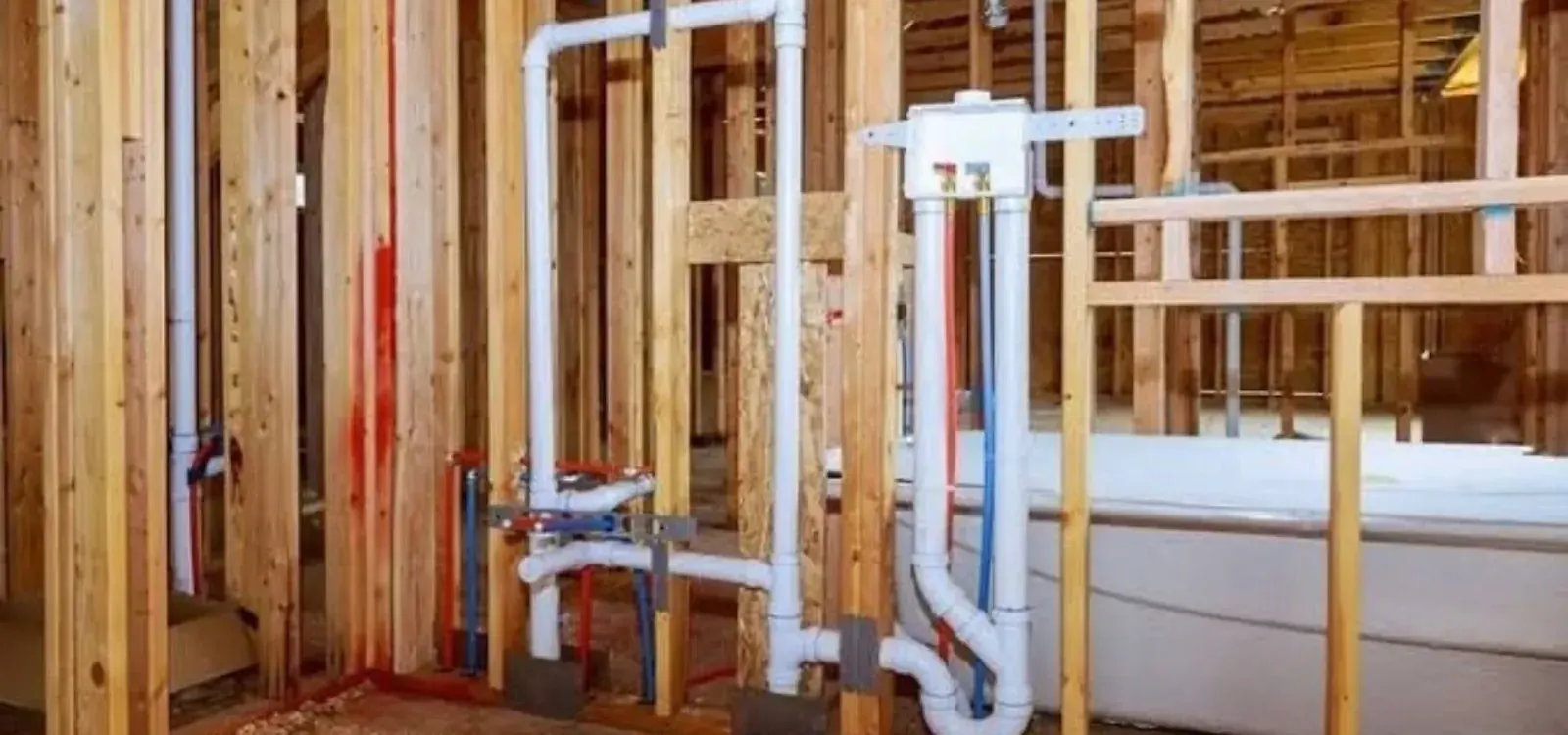
Basement plumbing rough-in in Willoughby, OH is the first stage of adding a bathroom, bar or laundry below grade. The plumber lays drains in or under the slab, runs supply lines, sets vents and stub-outs, and tests everything before the inspector signs off and concrete or drywall covers it. The key early question is whether the basement floor sits above or below the sewer, since that decides between a gravity drain and a sewage ejector.
Everything else follows from that choice. The rest of this post walks the work in the order it happens so you can plan the budget conversation, the permit visit and your contractor schedule.
The order of work, start to finish
Skipping a step is how bathrooms end up with a toilet that gurgles or a floor patch that has to be cut open twice.
- 1
Locate the main drain and its depth
The plumber finds the building drain and the sewer exit, then measures how far the basement floor sits below it. That height difference is the whole gravity versus ejector question.
- 2
Cut and trench the slab
Crews saw-cut the concrete along the planned path, break it out, and dig the trench for the new drain lines. Dust control and a clear route to the exterior for debris are worth planning.
- 3
Lay the drains, vents and cleanouts
Pipe is set at the pitch the code requires, with a cleanout placed where a drain machine can reach later. Vents are routed up through the framing before walls close.
- 4
Run the supply stub-outs
Hot and cold lines are brought to the shower, sink and toilet locations, with shutoffs where you will want to reach them.
- 5
Test before anything is covered
Drains get a water or air test and supply lines a pressure test, with the inspector present when the permit calls for it. Concrete goes back only after the pass.
- 6
Patch the slab
The trench is backfilled and compacted, then the concrete is poured and finished flush with the old floor.
Gravity drain or ejector pump
| Option | Works when | Trade-off |
|---|---|---|
| Gravity drain | The basement floor is high enough above the sewer exit for the pipe to slope down by itself | No pump to fail, but you may need to trench far across the slab |
| Sewage ejector pit | The floor sits below the sewer, so waste has to be lifted | Pump, sealed pit and vent are required, and you must plan for service access and power |
| Upflush toilet unit | A single toilet and a sink in a spot where no slab cutting is wanted | A compact option with limits on what it can serve, and it needs its own electrical supply |
| Hybrid layout | A bar sink drains by gravity, while the bathroom pumps up | Two systems to maintain, so the plan has to be drawn early |
Which option works depends on a measurement we take in person.
Planning a basement bathroom?
Call before the framer comes, and we will walk the space with you.
Willoughby rules that shape a basement plan
Plumbing permits for work inside the City of Willoughby come from the city's Division of Building Inspection at One Public Square, and the city issues separate permits for gas piping and sewer connections. Willoughby Hills and Willowick fall under the Lake County Building Department. The plumber follows the Ohio Plumbing Code, which tracks the 2021 International Plumbing Code with Ohio amendments, plus the local permit rules.
Section 915.04 of Willoughby's codified ordinances bars connecting sump pumps, foundation drains and areaway drains to a building sewer tied to the public sanitary sewer. If your basement plan includes a sump pit, that line must stay separate from the new bathroom drain. Ohio's October 2025 amendment also clarifies that fixture units for sump pumps do not add to building drain size.
Source: City of Willoughby Codified Ordinances Sec. 915.04 and permit forms, Lake County Building Department, and Ohio Department of Commerce October 2025 Ohio Plumbing Code amendment summary
The backwater valve question
The Ohio Plumbing Code has a provision for protecting fixtures that sit lower than the next upstream manhole cover with a backwater valve in the building drain. A finished basement bathroom is exactly that kind of fixture in many neighborhoods. Whether yours needs one depends on the sewer elevation, which the plumber and the permit office can confirm.
A backwater valve is a flap that closes when sewage tries to flow back toward the house. It needs access for cleaning, and it does not replace a working sump or ejector pump. If your area has had sewer backups, discuss it now, because adding it later means breaking the slab again.
Venting and fixture choice
Every drain needs a vent so it can flow and so trap seals do not siphon dry. A basement bathroom's vent has to reach the roof stack or tie into an existing vent, and routing it through finished floors above is often the hardest part. Tell the plumber early where you can open a wall or chase.
Floor drains are a separate detail. A drain that rarely sees water has a dry trap, and sewer gas comes up through a dry trap. A trap primer or a habit of pouring water in monthly keeps it sealed, and your plumber can show you which suits the space.
What a plumber will not do on this job
We do not frame walls, pour or finish concrete, or wire the ejector pump circuit. A framer, a concrete contractor and an electrician do those parts, and the schedule has to line up. The plumber's stages, which fall under plumbing installation, are rough-in before the slab is patched and fixture set-up after drywall.
Waterproofing is its own question. If the basement leaks or has a wet wall, solve that before finishing. A structural waterproofing contractor handles foundation cracks and exterior drains, while a plumber handles pits and pumps. Our sump pump installation and repair work covers the pit side.
Two towns, two starting points
In Mentor, the city's Sanitary Sewer Backup Reduction Grant page lists backwater check valves, floor drain plugs, standpipes and overhead plumbing as eligible items. The page was last modified in 2016, so ask the city whether funding is open before counting on it. Many Mentor homes are owner-occupied, which makes finishing a basement a common project there.
Willowick has a housing stock where more than half the homes were built in the 1950s. Old drain and vent runs behind existing walls may limit where a new fixture can tie in. Ask the plumber to camera the main drain before you commit to a bathroom location.
Basement plumbing rough-in questions
If the basement floor is below the sewer exit, waste cannot flow out by gravity and has to be lifted. A plumber measures the building drain depth and the floor height to confirm. It is a measurement, not a guess, and it should be done before you buy fixtures or hire a framer.
Sometimes, with an upflush unit that grinds waste and pumps it to a higher drain. These serve limited fixtures and need electrical supply. Slab cutting gives a more standard install and fewer limits, so the right choice depends on how many fixtures you plan and how long you will own the house.
New plumbing work generally does, and the City of Willoughby issues its own plumbing permits, with separate gas and sewer permits. Willoughby Hills and Willowick use the Lake County Building Department instead. Call the office that covers your address and check the current fee schedule.
Sort the water first. Willoughby Hills basements flooded that month when the Chagrin River rose above 14 feet, and power outages stopped sump pumps. Fix drainage, add a backup pump, and talk about a backwater valve, then plan the bathroom. Finished walls over a wet slab is an expensive mistake.
The building department that issued the permit sets the inspection. The plumber keeps the trench open and the test in place until the inspector signs off. Do not let the concrete crew show up until the plumber has the pass in hand.
Still have a question?
Call the 24/7 line and a person answers.